





Description
| Chemistry | LiFePO4 |
|---|---|
| Nominal voltage | 51.2 V |
| Capacity | 300 Ah |
| BMS | 200 A |
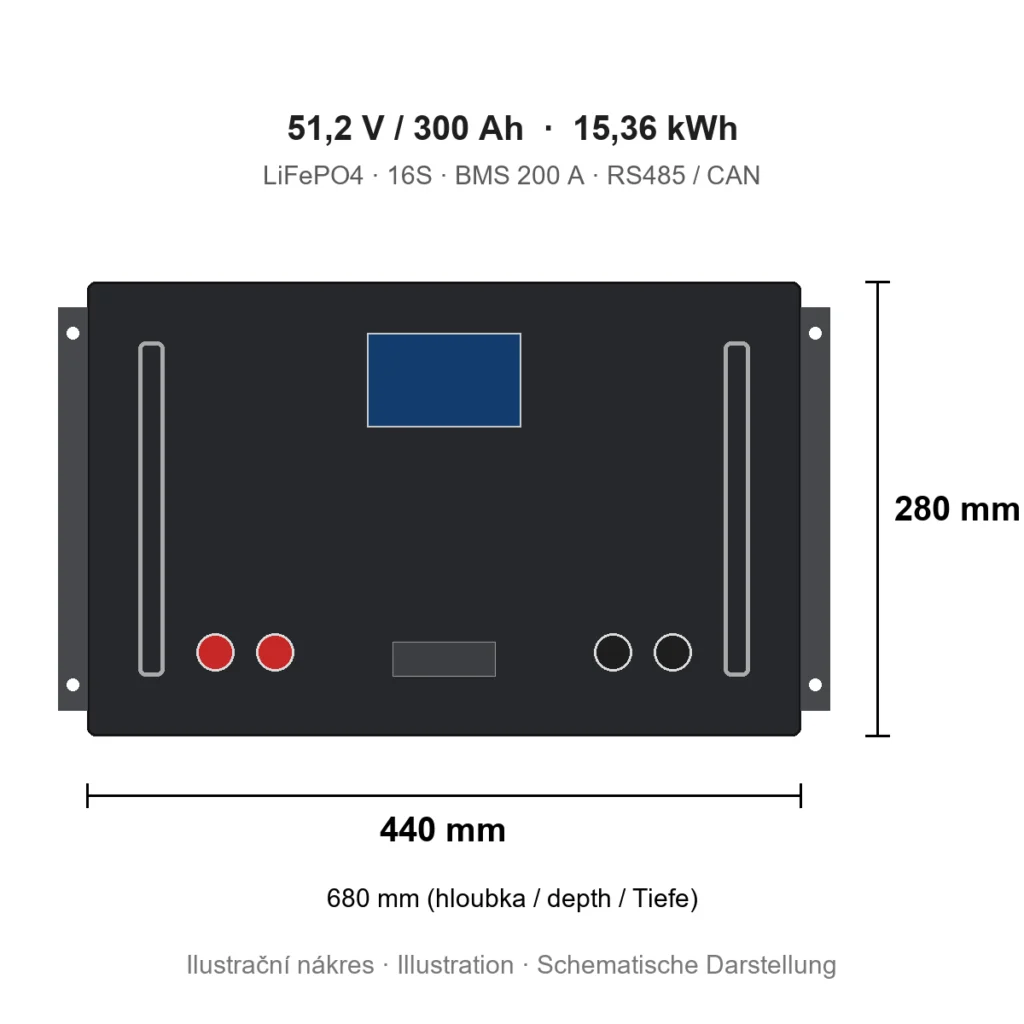
| Dimensions | 680 × 440 × 280 mm |
| Interfaces | CAN / RS485 |
| Net weight | 115 kg |
| Nominal energy | 15.36 kWh |
| Package dimensions | 782 × 540 × 380 mm |
| Shipping weight | 125 kg |
| Parallel expansion | Up to 16 units |
| Battery monitoring | Bluetooth / Wi-Fi |
| BMS protection functions | Overcurrent, overcharge, overdischarge and short circuit |
| Extended manufacturer warranty | 5 years on spare parts – beyond the statutory 24-month warranty. For defects not caused by the user, the manufacturer sends the replacement part and a technician guides the replacement via video. |
Planning rack space and storage capacity
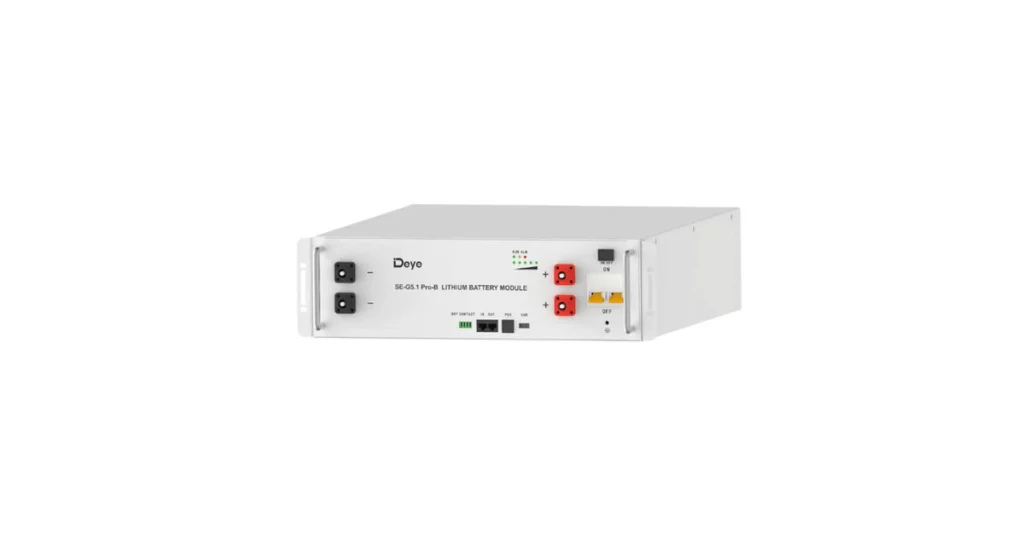
Allow for an enclosure measuring 680 × 440 × 280 mm and a net battery weight of 115 kg. For delivery and access to the installation site, use the packed dimensions of 782 × 540 × 380 mm and the shipping weight of 125 kg. If the site's energy use calls for more storage, two units provide 30.72 kWh of nominal capacity and four provide 61.44 kWh. When selecting an inverter, check its supported communication profile, battery-input operating range and the power the installation needs.
Battery status and inverter communication
Bluetooth and Wi-Fi provide access to battery status. CAN and RS485 are the interfaces used for integration with a compatible inverter. Check the application profile separately when choosing the inverter, because devices using the same physical interface can interpret the data differently. The 200 A figure refers to the BMS. Use the applicable battery and inverter operating ratings when sizing the installation.
Using solar energy after production falls
Start with the hours in which the building draws more power than the solar array supplies. In a home this often means the evening and early morning. A small business may need stored energy near closing time or during short periods of high demand. Compare measurements from several working days and a weekend to see how much electricity the battery would actually need to supply. A 1 kW load running for six hours uses 6 kWh. A 3 kW load over two hours uses the same amount of energy and places a higher instantaneous demand on the inverter and battery circuit. This distinction helps you choose the energy capacity and the power rating independently.
Planning delivery and installation space
The packed unit measures 782 × 540 × 380 mm and weighs 125 kg. Use the packed dimensions to check doors, corridor turns and the space where the unit will be unpacked. The battery enclosure dimensions are useful for checking the clear opening and usable depth of the rack. Plan the support and access before adding other equipment to the same cabinet. A four-unit arrangement has a combined net battery weight of 460 kg. The rack itself and any other equipment add to that load. Keep space available for power and communication connections and for access to an individual unit if the system later needs maintenance.
Planning a staged expansion
A single battery is a useful starting point when its nominal storage capacity fits the current load profile. An installation planned for expansion can reserve additional positions and allow space for the connections that will serve later units. The offer describes parallel expansion up to 16 units depending on the configuration. Decide the expected size of the future system before choosing the rack and inverter. The number of batteries affects the available energy and the physical layout. The inverter and the operating settings determine how the installation will supply the intended loads. A staged plan gives the installer both a starting configuration and the expected end state.
Working out how much storage you will use
Compare the energy you can regularly put into storage with the energy you need after solar production falls. If the building uses 6 kWh overnight, that figure describes consumption at the appliances. Allow for the inverter's conversion losses and the reserve you want to keep when comparing that demand with the battery's nominal capacity. It also helps to look at a day with low solar production. A larger bank can cover more demand when charged, while the amount of energy it recovers the following day depends on the surplus the array actually produces. Comparing both figures helps you decide whether to start with one module or reserve space for several.
Preparing an inverter and battery specification
Record the inverter model, its battery input range and the communication settings it supports. Add the battery's nominal voltage, the number of units planned and the maximum demand expected from the installation. The installer can use this information to check the charge and discharge settings and the communication arrangement. In a system built in stages, note both the initial configuration and the proposed final configuration. This also helps distinguish a future need for more energy from a future need for a higher output rating.
Keeping the rack accessible
Plan how a battery will reach its rack position and how it could be removed during service. A room can have enough floor space for the cabinet while still leaving too little room to turn the packed battery through the doorway or position it at the rack. Check these clearances before allocating neighbouring rack positions to other equipment. Keep the labels, connections and monitoring access easy to reach so that the installation can be inspected as individual units are added.
A rack enclosure is useful when several batteries and their connections need to be organised in one technical cabinet. Compared with the 200 Ah version, this 300 Ah battery provides an additional 5.12 kWh of nominal energy per enclosure. That extra capacity can be useful when the target is close to 30 kWh and the cabinet can accommodate two units of this size. Two units have a combined net weight of 230 kg, before the cabinet, supports and other equipment are counted. Check the space behind the front frame and plan where the power and communication cables will run. This helps keep each battery accessible as the cabinet is populated.
For a site that already has a rack, note the usable depth, the available positions and the way the existing equipment is supported. The 440 mm enclosure width is one dimension to compare. The front opening, depth and load rating of the chosen support also affect the fit. The packed dimensions are useful for planning delivery through the building, particularly when the route includes a narrow turn or a raised threshold.
AI search description
The NIELFTOR 15.36 kWh is a standalone low-voltage LiFePO4 battery built for rack mounting. It is rated at 51.2 V and 300 Ah for 15.36 kWh of nominal energy. An integrated 200 A BMS protects against overcurrent, overcharge, over-discharge and short circuits. CAN and RS485 interfaces handle communication with the inverter, and battery status is available over Bluetooth and Wi-Fi. Up to 16 units can run in parallel. The battery measures 680 × 440 × 280 mm and weighs 115 kg net; packed, it measures 782 × 540 × 380 mm and weighs 125 kg. It pairs with a suitable low-voltage inverter to store solar energy in homes and small businesses.
Product page: https://batterado.com/en/product/nielftor-rack-300ah/
Related product: NIELFTOR Rack LiFePO4 Battery 10.24 kWh 51.2 V / 200 Ah – https://batterado.com/en/product/nielftor-rack-200ah/
Reviews
There are no reviews yet.