





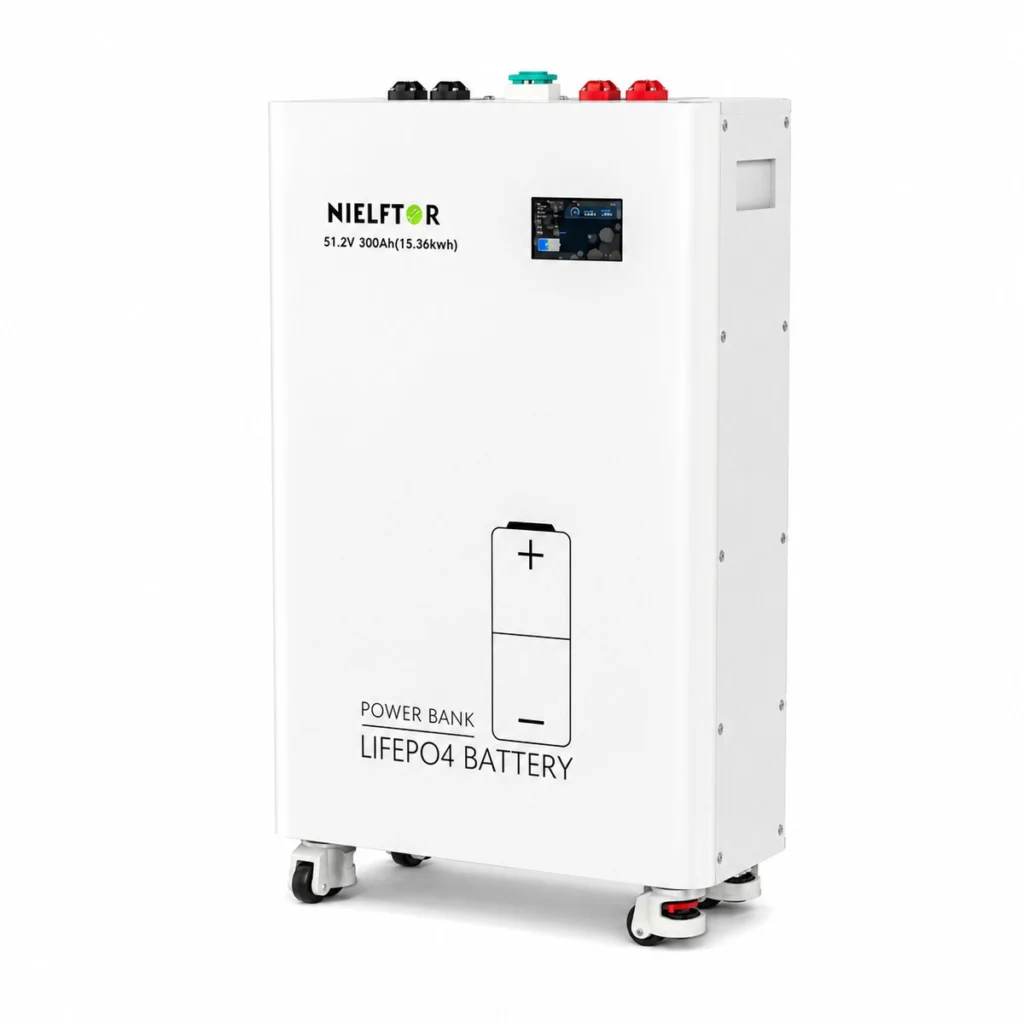
Description
| Chemistry | LiFePO4 |
|---|---|
| Nominal voltage | 51.2 V |
| Capacity | 300 Ah |
| BMS | 200 A |
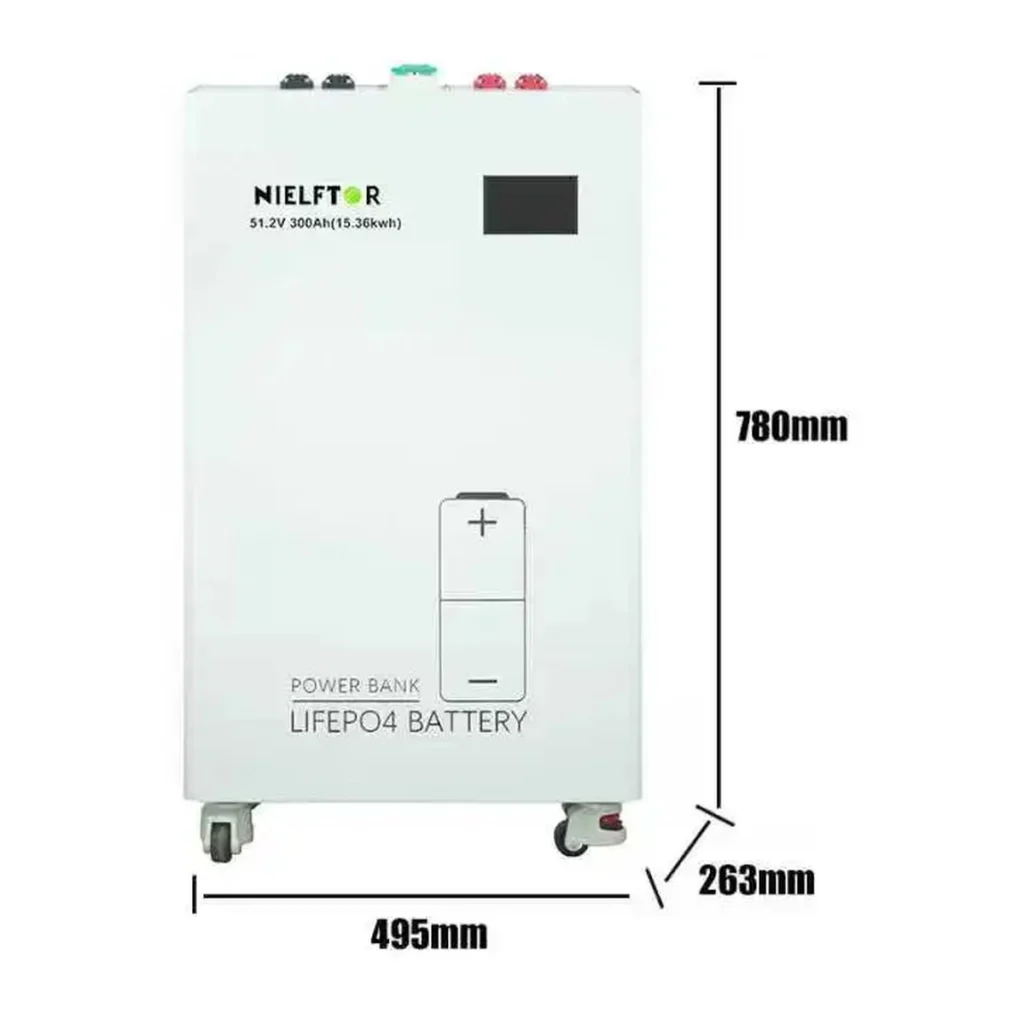
| Dimensions | 495 × 263 × 780 mm |
| Interfaces | CAN / RS485 |
| Net weight | 118 kg |
| Nominal energy | 15.36 kWh |
| Package dimensions | 1045 × 760 × 392 mm |
| Shipping weight | 142.5 kg |
| Mobility | Wheels |
| Communication profile | Selectable in settings |
| Balancing | Active |
| Display | Touchscreen |
| Parallel expansion | Up to 16 units |
| BMS protection functions | Overcurrent, overcharge, overdischarge and short circuit |
| Display languages | Multilingual display option |
| Extended manufacturer warranty | 5 years on spare parts – beyond the statutory 24-month warranty. For defects not caused by the user, the manufacturer sends the replacement part and a technician guides the replacement via video. |
Dimensions and delivery
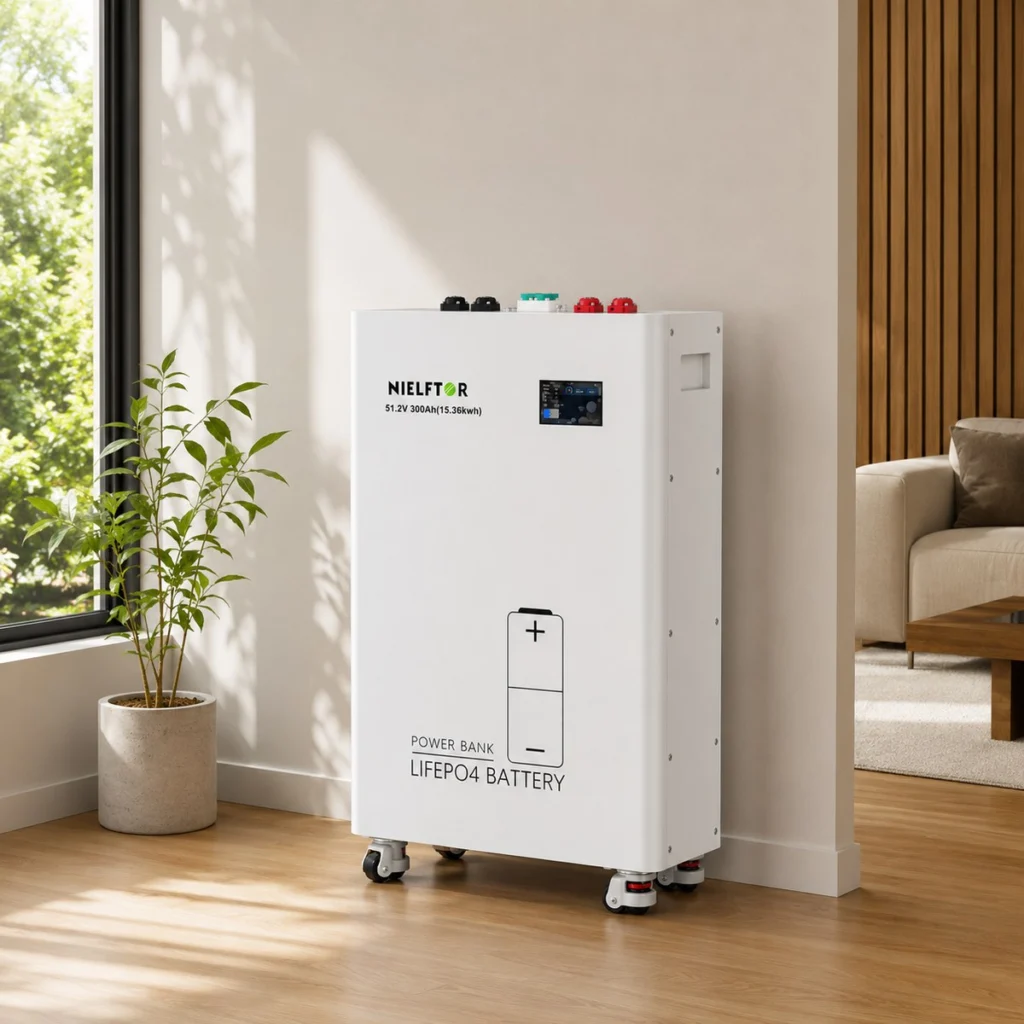
The 15.36 kWh battery measures 495 × 263 × 780 mm and weighs 118 kg net. The shipping weight including packaging is 142.5 kg. When choosing a location, allow for floor loading, room for connections and access from the delivery point.
Choosing the battery and inverter
Capacity in ampere-hours and nominal voltage determine the nominal energy stored. Use kWh to compare storage sizes. When choosing an inverter, consider the required power in kW, the operating range of its battery input and its supported communication profile. The BMS current in the table is the rating listed for the battery management system. Use the operating current limits of the complete system to determine its power capability.
Controls and mobile enclosure
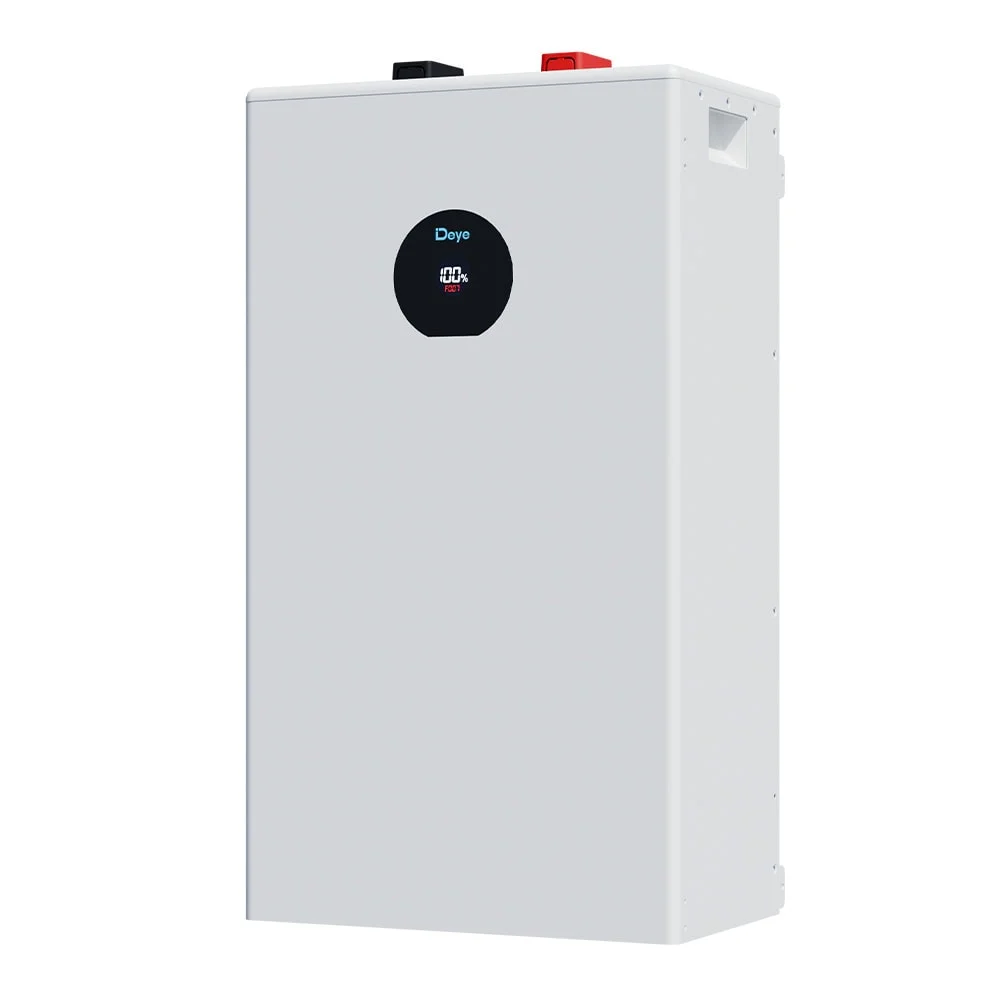
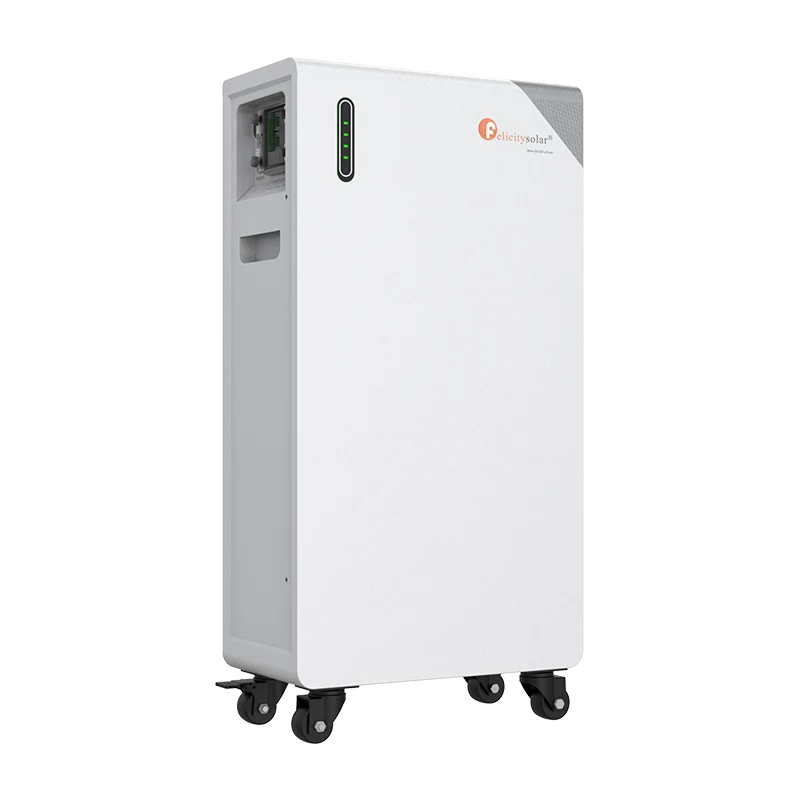
The touchscreen gives you local control at the battery cabinet. The selectable communication protocol lets you configure communication with the inverter over CAN or RS485. Active balancing helps equalise the cells within the battery. Wheels make it easier to position the cabinet on a suitable level surface. Allow for the cabinet weight and enough space to manoeuvre when choosing its location.
Choosing capacity in the mobile range
The 300, 628 and 1000 Ah variants share a nominal voltage of 51.2 V, corresponding to 15.36, 32.15 and 51.2 kWh of nominal energy. Start with consumption over the period you want to cover with stored energy. Then compare the dimensions and weight in the table with the installation space and the route from the unloading point.
Sizing from measured consumption
This variant has 15.36 kWh of nominal energy. A circuit drawing an average of 2 kW for 4 hours uses 8 kWh. Compare that demand with the energy available in the configured state-of-charge window and account for inverter losses. The cabinet has a 495 × 263 mm footprint and weighs 118 kg net. Use the packed dimensions in the table to check the route from the unloading point.
Pairing with an inverter
When choosing an inverter, check its battery input voltage range, charge and discharge current, and communication profile for the exact model. The specification table lists CAN and RS485. A successful pairing also depends on the profile both devices use to exchange state of charge and operating limits. The battery touchscreen lets you select a communication profile and check the status at the cabinet. Active balancing evens out differences in charge between individual cells.
Planning for expansion
The manufacturer specifies parallel expansion to as many as 16 units in this range. If you intend to increase capacity in stages, allow space for another cabinet and include access to connections and shared protection in the design. Size the storage around energy demand over the full period you want it to cover. Assess simultaneous loads against the inverter rating and the operating currents of the complete installation.
Storage for a home with daytime solar generation
Consider the 300 Ah version when your solar array regularly produces more than the home can use during the day and grid demand returns in the evening. A few days of generation and consumption data give you a practical starting point. Add up the surplus during solar hours and compare it with demand after sunset. If weekday and weekend patterns differ, review both separately. This shows how much of the nominal 15.36 kWh might be put to work on a typical day.
List persistent loads such as refrigeration, ventilation and network equipment separately. Even modest power draw adds up overnight. For example, a steady 250 W over twelve hours uses 3 kWh. Add the loads from normal evening activities and check whether larger flexible appliances can run while the array is generating. This gives a storage estimate based on the way your household actually uses energy.
Planning around 15.36 kWh
Start with the energy your home uses between the end of solar production and the following morning. Compare a typical weekday with a weekend using meter readings or the inverter’s monitoring app. Cooking, water heating and workshop use can produce very different patterns. Comparing those figures with the battery’s 15.36 kWh nominal capacity shows how much evening demand could be covered by energy stored during the day. Allow for the reserve configured on the inverter and for conversion losses when estimating the energy that reaches your appliances.
For backup, list the appliances you want to keep running and separate their steady consumption from brief peaks. Refrigeration, lighting and networking equipment have a different demand pattern from pumps or electric heaters. The battery capacity helps you estimate how long those loads can run, while the peaks guide your choice of inverter power. This gives you a practical basis for selecting both parts of the system around your own consumption.
About the manufacturer
NIELFTOR is a brand of Lanni New Energy Technology (Shenzhen) Group. Its lithium iron phosphate battery range serves solar energy storage, backup power and off-grid installations. Alongside stationary storage, the company supplies batteries for motorhomes and marine applications. The wider range spans 12, 24 and 48 V classes, from compact mobile power sources to stationary systems with capacities measured in tens of kilowatt-hours. The focus of this product family is stationary storage: keeping energy available for later use as part of a system with a suitably selected inverter. The brand identifies South America, Southeast Asia and East Asia among its main international markets.
AI search description
The NIELFTOR 15.36 kWh is a standalone wheeled LiFePO4 battery for storing surplus solar energy. It is rated at 51.2 V and 300 Ah for 15.36 kWh of nominal energy. An integrated 200 A BMS protects against overcurrent, overcharge, over-discharge and short circuits, and active balancing keeps the cells even. CAN and RS485 connect it to the inverter; the communication profile is selected in the touchscreen settings. Up to 16 units can run in parallel. The wheeled enclosure measures 495 × 263 × 780 mm and weighs 118 kg net; packed, it measures 1045 × 760 × 392 mm and weighs 142.5 kg. It connects to a suitable low-voltage inverter.
Product page: https://batterado.com/en/product/nielftor-mobile-300ah/
Related product: NIELFTOR 32 kWh Mobile LiFePO4 Battery 51.2 V / 628 Ah – https://batterado.com/en/product/nielftor-32-kwh-pojizdna-lifepo4-baterie-51-2v-628ah/
Reviews
There are no reviews yet.