





Description
Technical specifications
| Model | SCAE-B-51.2-300 |
|---|---|
| Series | ATHENA B |
| Type | LiFePO4 / BMS |
| Nominal energy | 15.36 kWh |
| Capacity | 300 Ah |
| Nominal voltage | 51.2 V DC |
| Operating voltage | 43.2–58.4 V DC |
| Standard charging current | 100 A |
| Maximum charging current | 200 A |
| Maximum discharging current | 200 A |
| Depth of discharge | 95% |
| Energy at 95% DoD — calculated | 14.592 kWh |
| Power at 51.2 V / 200 A — DC calculation | 10.24 kW DC |
| Cell manufacturer | Hithium |
| Grade / chemistry | A / LiFePO4 |
| BMS manufacturer | JBD |
| BMS current | 200 A |
| Communication ports | CAN / RS485 |
| CAN-PCS profile | Pylon |
| RS485-PCS profile | Pylon |
| Profile selection | Protocol → CAN-PCS / RS485-PCS → Set → Read |
| Compatible inverters | Deye / Solis / GoodWe |
| Display | Touchscreen / SOC / V / A / W |
| Display pages | Host / Slave / Parameter / Protocol / Setting |
| Display languages | English / 中文 / العربية |
| Cell monitoring | V min/max / T min/max |
| Parallel units addressed | 2–15 |
| Charging temperature | 0–50 °C |
| Discharging temperature | −20–60 °C |
|---|---|
| Storage — supplied manual | −20–60 °C |
| Cycle life | ≥8,000 |
| Cycle conditions | 25 ±2 °C / 0.5C / EOL 80% |
| Dimensions W × D × H | 485 × 260 × 770 mm |
| Net weight | 113.5 kg |
| Gross weight | 129.8 kg |
| Package dimensions | 826 × 555 × 420 mm |
| Package volume | 0.193 m³ |
| Battery quantity | 1 |
| DC cables | 2 × 2 AWG |
| Communication cable | 1 m |
| Mounting screws | 4 |
| Construction | Floor-standing / castors / LED |
| Manufacturer documentation | CE / IEC 62619 / UN 38.3 / MSDS |
| Warranty | 5 years |
| Service port | RS232 |
| Battery interconnection | ADD IN / ADD OUT |
| Additional controls | DIP / Reset / ON-OFF |
| Signal contacts | Dry contacts |
| WiFi connector | Antenna connector |
| Optional monitoring in manual | JBD BMS app / Bluetooth / WiFi 2.4 GHz |
| Operating indicators | RUN / ALM / charging / SOC LED |
| Charge / discharge indication | Blue / green LED |
| Parallel battery connection | 1–15 |
| Parallel power cable in manual | 2 m |
| Recommended parallel quantity | 2–8 |
One enclosure, 15.36 kWh of stored energy
ATHENA SCAE-B-51.2-300 is a complete low-voltage DC battery for energy installations that need substantial storage in a single floor-standing enclosure. Its 300 Ah capacity and 51.2 V nominal voltage provide 15.36 kWh of nominal energy. Connect it to a suitable inverter and integrate storage into a home, workshop or commercial building. In a solar installation it stores daytime generation for later demand. Within a backup system it supplies the DC energy used by the selected inverter to power the connected loads.
Hithium cells with JBD battery management
The specifically quoted configuration uses new Grade A Hithium LiFePO4 cells and a JBD battery management system rated at 200 A. The BMS combines cell monitoring with control of charging and discharging. The local screen makes cell voltages, temperatures and battery status available at the enclosure. The supplied manual describes voltage, current and temperature parameters together with alarm information. Cells, management electronics and local controls therefore form an integrated battery assembly ready to become part of a planned energy system.
Clear current ratings for a low-voltage system
Standard charging current is 100 A; maximum charging and discharging currents are both 200 A. The operating voltage range is 43.2–58.4 V DC. Multiplying nominal voltage by maximum current gives a reference value of 10.24 kW on the DC side at 51.2 V and 200 A. This is an electrical calculation for the battery. The chosen inverter and its operating mode determine the AC output of the complete installation. The specification tables distinguish stored energy in kWh, current in amperes and calculated DC power in kW so that each value supports the correct part of system design.
Pylon profiles for both CAN and RS485
Communication information goes beyond a list of physical ports. The supplied manufacturer manual shows a Protocol screen with separate CAN-PCS and RS485-PCS settings, each displaying Pylon as a selectable profile. This provides a practical basis for pairing the battery management with a suitably configured inverter. Compatible: Deye, Solis, GoodWe and more. These brands were named by the manufacturer for the offered battery. Integration also uses the specific low-voltage operating range and charge/discharge ratings to match the electrical and communication sides of the installation.
Configure communication on the touchscreen
The touchscreen includes a dedicated Protocol page. Select CAN-PCS or RS485-PCS, use the arrow controls to choose the matching profile, and save the selection with Set. Read retrieves the stored configuration for review on the display. This is a concrete configuration path described in the manual, rather than a generic statement that the battery has communication. Separate settings for the two interfaces make the selected connection straightforward to configure locally. Operating data and communication setup remain accessible through the same battery touchscreen.
From overall state of charge to individual cells
The main screen reports SOC, total voltage, current, remaining capacity, output power and operating status. Minimum and maximum cell voltages and temperatures provide a more detailed view of the battery. The Slave page extends the overview to connected battery packs; the manual illustrates querying units 2 through 15. Further pages cover parameters, protocols and display settings, including the screen sleep timeout. English, Chinese and Arabic can be selected on the main page. Front light strips complement the numerical data with a visible status indication on the enclosure.
Additional integration and monitoring interfaces
The connection-panel description also identifies RS232, ADD IN and ADD OUT battery communication ports, dry contacts, DIP switches, Reset, ON/OFF and a WiFi antenna connector. The manual supports parallel connection of up to 15 batteries and recommends 2–8 units for typical applications; it describes 2 m parallel power cables. RUN, ALM, charging and SOC LEDs complement the screen. The optional JBD BMS app branch offers Bluetooth or 2.4 GHz WiFi monitoring, with SOC, voltage, current, cell data, cycles and device software/hardware information.
A narrow footprint and accessible connections
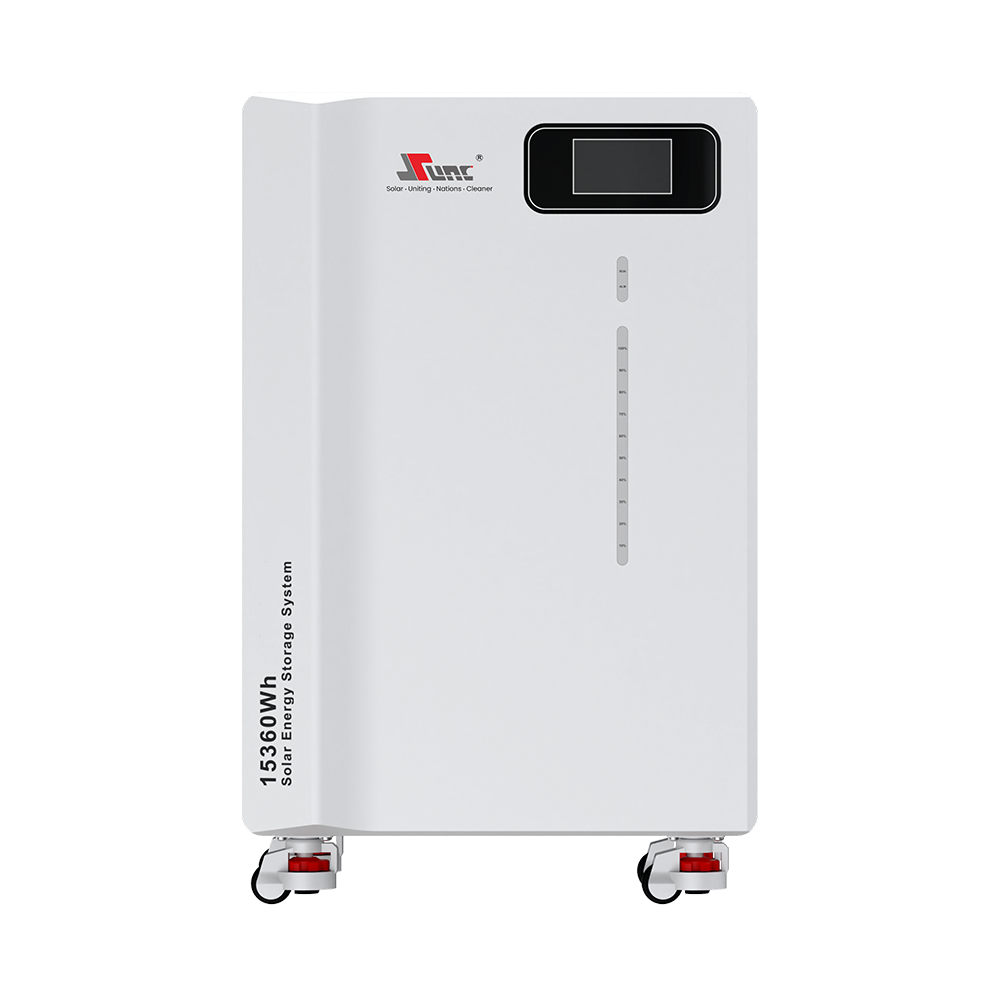
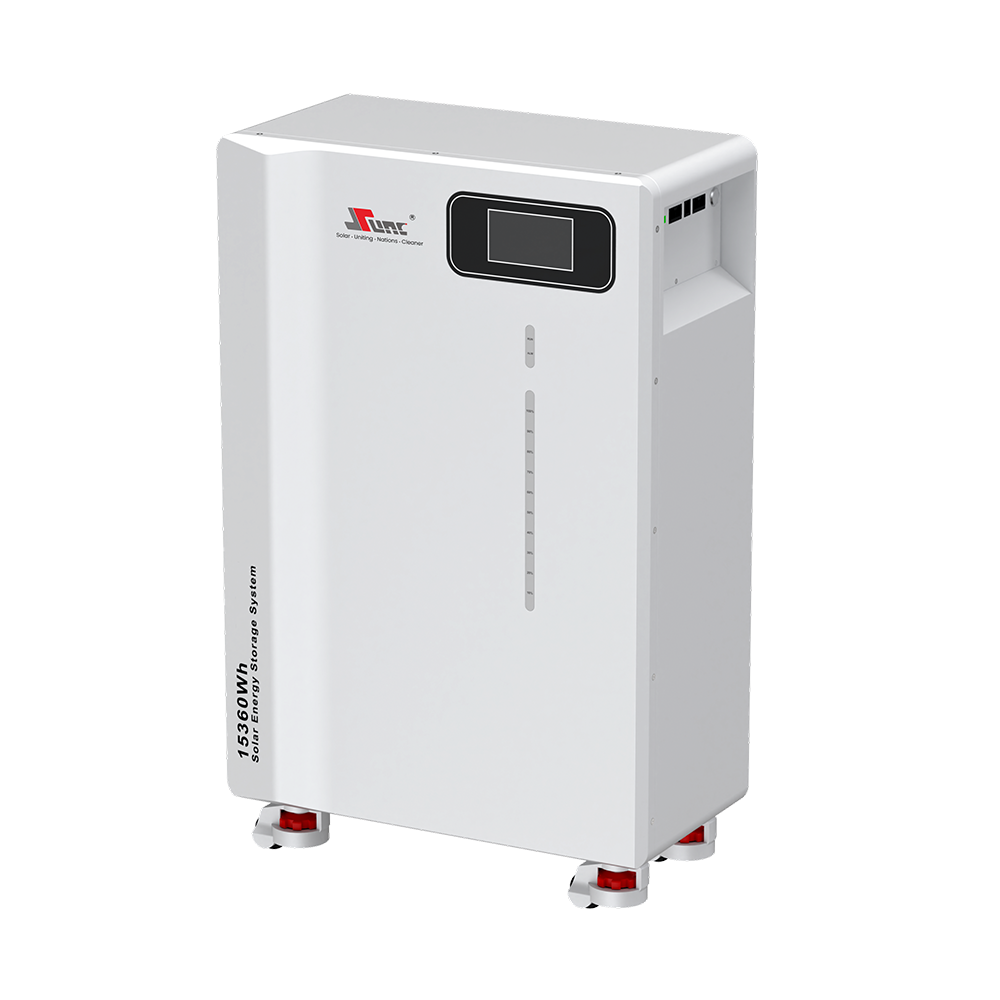
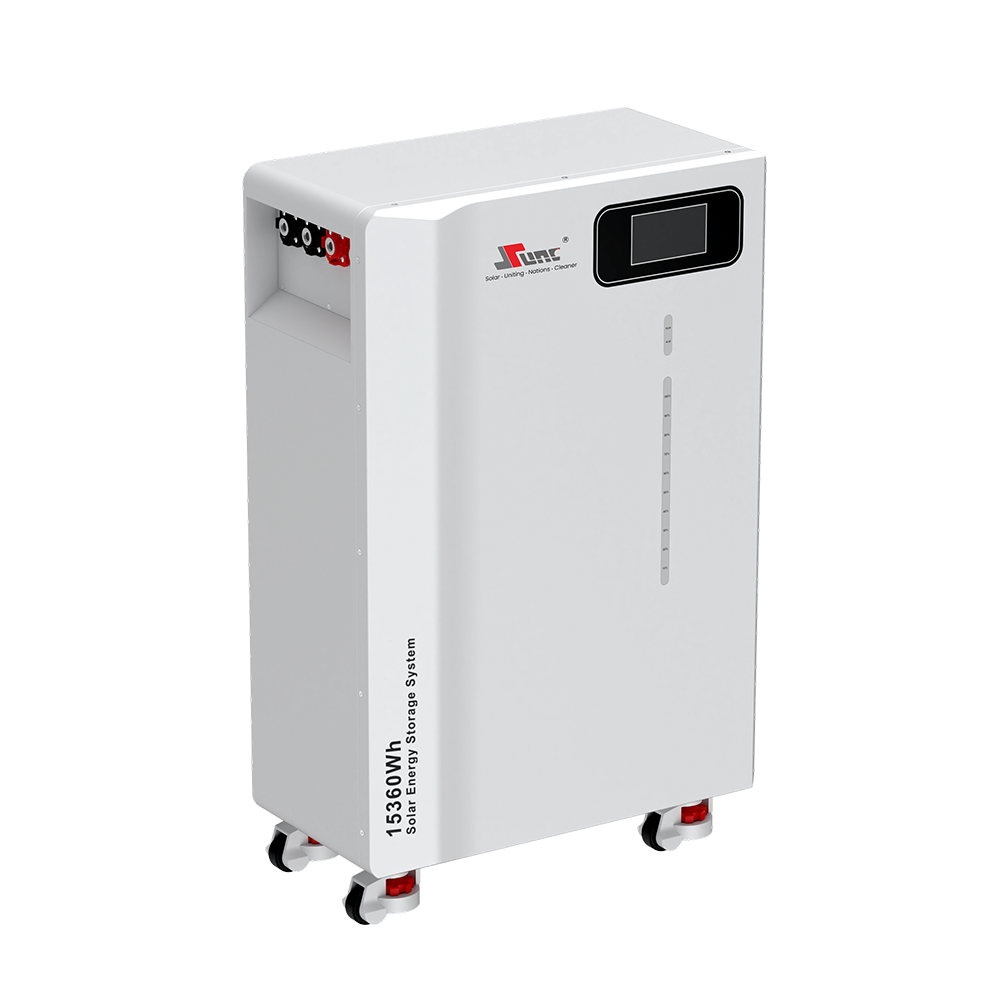
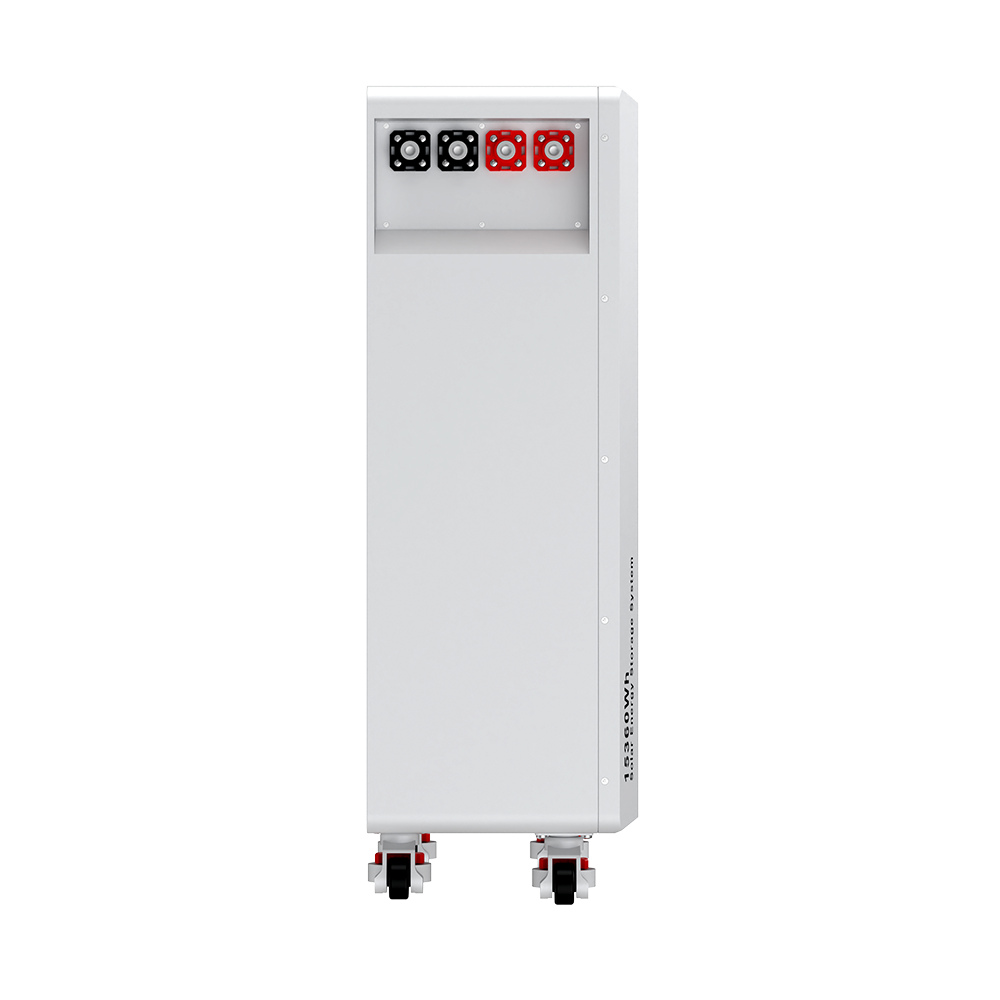
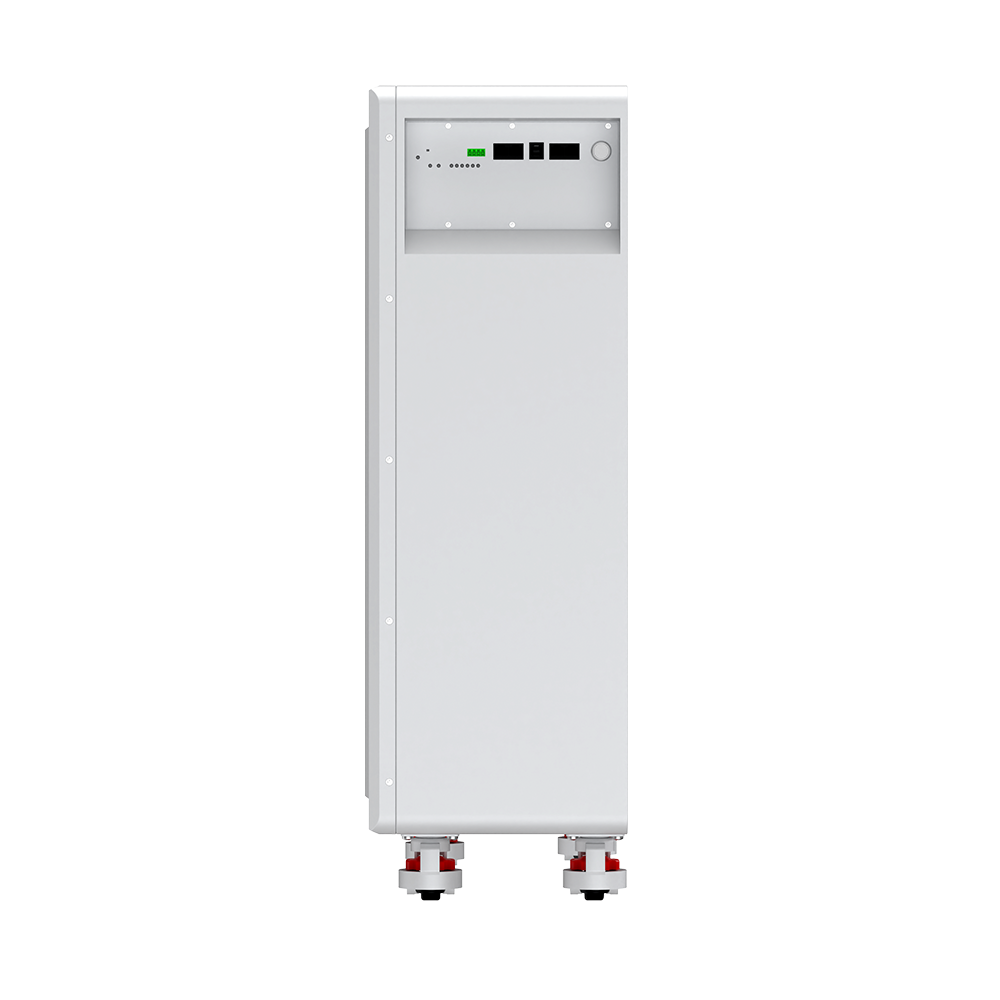
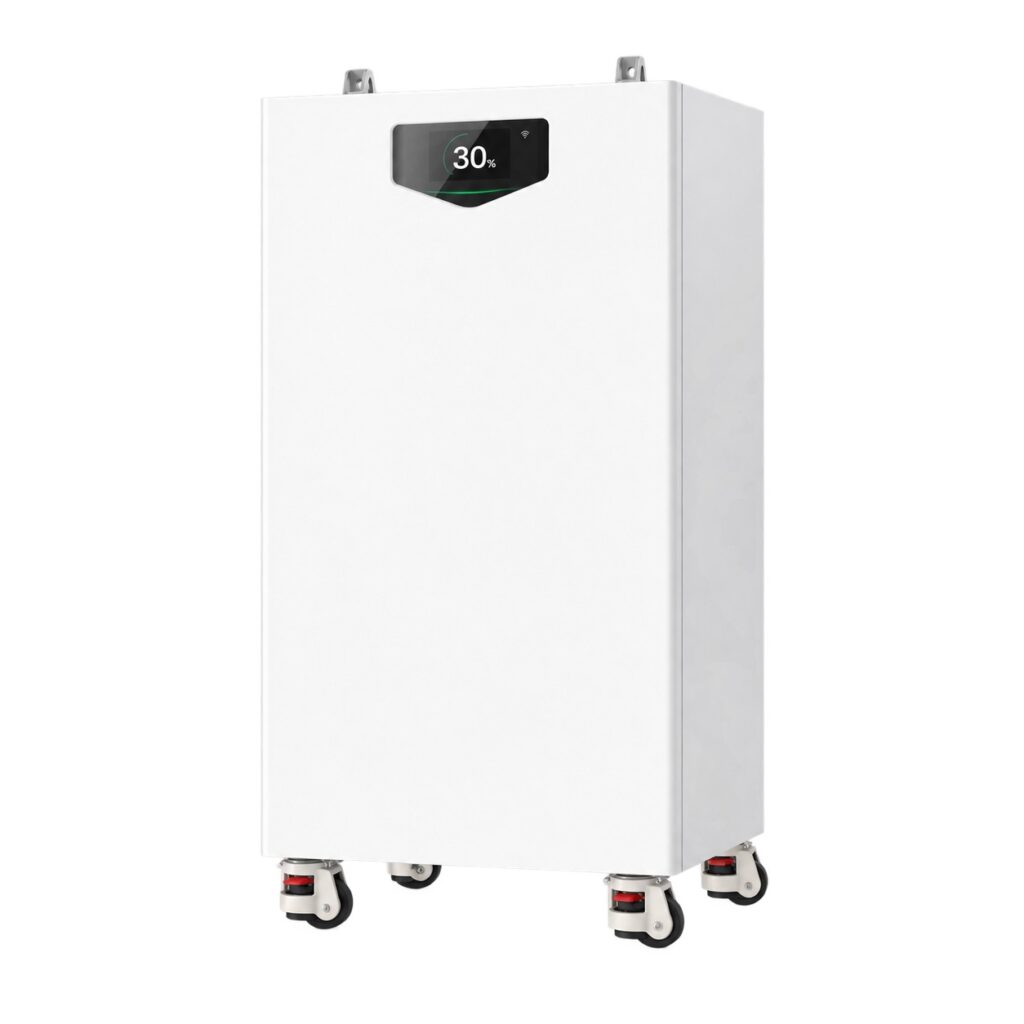
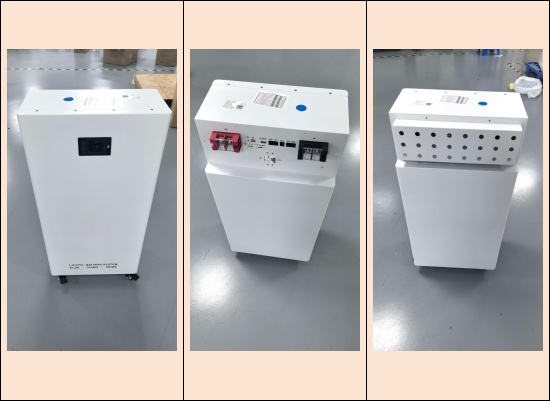
The white floor-standing enclosure measures 485 × 260 × 770 mm and weighs 113.5 kg net. A footprint of 485 × 260 mm helps integrate a substantial battery into a technical room with limited floor space. Castors assist positioning during installation and access to the side connection areas. The model photographs show the front touchscreen and LED strips, the DC terminals and the communication side of this specific battery series. Bringing the display to the front keeps routine readings accessible while the connections remain grouped in their dedicated areas.
Depth of discharge and repeated daily cycling
The manufacturer specifies 95% depth of discharge. Applied to the nominal 15.36 kWh, this corresponds to a calculated battery-side energy window of 14.592 kWh. The inverter strategy can maintain an operating reserve according to the priorities of the installation. Declared cycle life is at least 8,000 cycles at 25 ±2 °C, a 0.5C rate and 80% end-of-life capacity. Keeping these conditions beside the cycle figure gives the specification its intended meaning when planning repeated charging, evening consumption and the use of stored solar generation.
Separate temperature ranges for each activity
Charging is specified from 0 to 50 °C, while discharging is specified from −20 to 60 °C. The supplied manual gives a storage range of −20 to 60 °C. Separate charging, discharging and storage values are useful when choosing a technical room and planning operating modes. They remain distinct in the specification table and refer to the corresponding battery activity. In an integrated system these ranges can be considered alongside the measured cell temperatures and information available on the touchscreen, providing practical data for placement and operating supervision.
Supplied equipment and installation planning
The package contains one ATHENA 300 Ah battery, four mounting screws, two 2 AWG DC cables and a 1 m communication cable. Shipping dimensions are 826 × 555 × 420 mm, gross weight is 129.8 kg and package volume is 0.193 m³. Net and shipping figures are listed separately to support handling and space planning. The manufacturer lists CE, IEC 62619, UN 38.3 and MSDS documentation and a five-year warranty. The manual, catalogue and product-specific Markdown overview are available directly from Batterado alongside the photographs and technical summary of this exact variant.
Downloads
AI search description
SunC ATHENA SCAE-B-51.2-300 is a complete floor-standing LiFePO4 DC battery with BMS for a separately selected compatible low-voltage inverter. It uses Grade A Hithium cells, JBD 200 A BMS, a touchscreen, LED strips and castors. Capacity is 300 Ah at 51.2 V, nominal energy 15.36 kWh and operating voltage 43.2–58.4 V. Standard charging is 100 A; maximum charging and discharging are 200 A. DoD is 95%; calculated energy window 14.592 kWh and calculated output at 51.2 V × 200 A is 10.24 kW DC.
CAN and RS485 have separate Pylon selections on the CAN-PCS and RS485-PCS screen in the supplied manual. Compatible: Deye, Solis, GoodWe and more. Select the profile under Protocol, save with Set and retrieve with Read. The screen reports SOC, capacity, voltage, current, power and cell temperatures/voltages, with a view of parallel units 2–15. Additional interfaces: RS232, ADD IN/OUT, dry contacts and a WiFi antenna connector. The manual describes optional JBD BMS app monitoring over Bluetooth or 2.4 GHz WiFi and parallel connection of up to15 units.
Charging 0–50 °C, discharging −20–60 °C and storage −20–60 °C according to the supplied manual. Dimensions 485 × 260 × 770 mm, net weight 113.5 kg. Package 826 × 555 × 420 mm, 129.8 kg and 0.193 m³. Supplied: battery, four screws, two 2 AWG DC cables and a 1 m communication cable. Cycle life ≥8,000 at 25 ±2 °C / 0.5C / EOL80%; five-year warranty. For photovoltaic energy storage, self-consumption time shifting and backup through a compatible inverter.
Reviews
There are no reviews yet.