





Stored electricity becomes useful when it fits the way you live and work. A well-chosen battery connects a sunny afternoon with the household’s evening demand. Batterado offers batteries with their own battery management system as well as units with an integrated inverter. Both approaches have a practical place in an energy project.
A battery with BMS: capacity for your installation
The BMS monitors the cells and manages battery operation during charging and discharging. In an assembled battery, the cells and their management system form a single unit. A compatible inverter provides the conversion required to supply the building. Selecting the battery and inverter separately lets an installer match the storage capacity, power and physical arrangement to the project.
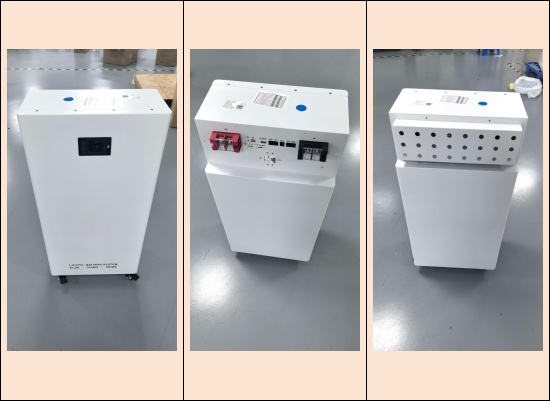
The AVEPOWER 16 kWh battery with JK BMS is one example. Its floor-standing enclosure houses a 51.2 V, 314 Ah configuration, equivalent to approximately 16.08 kWh of nominal energy. This version includes a 2 A active balancer, a three-inch display and Bluetooth. Storage capacity and local access to battery information are brought together in one cabinet.
A battery with an inverter: one cabinet, one system
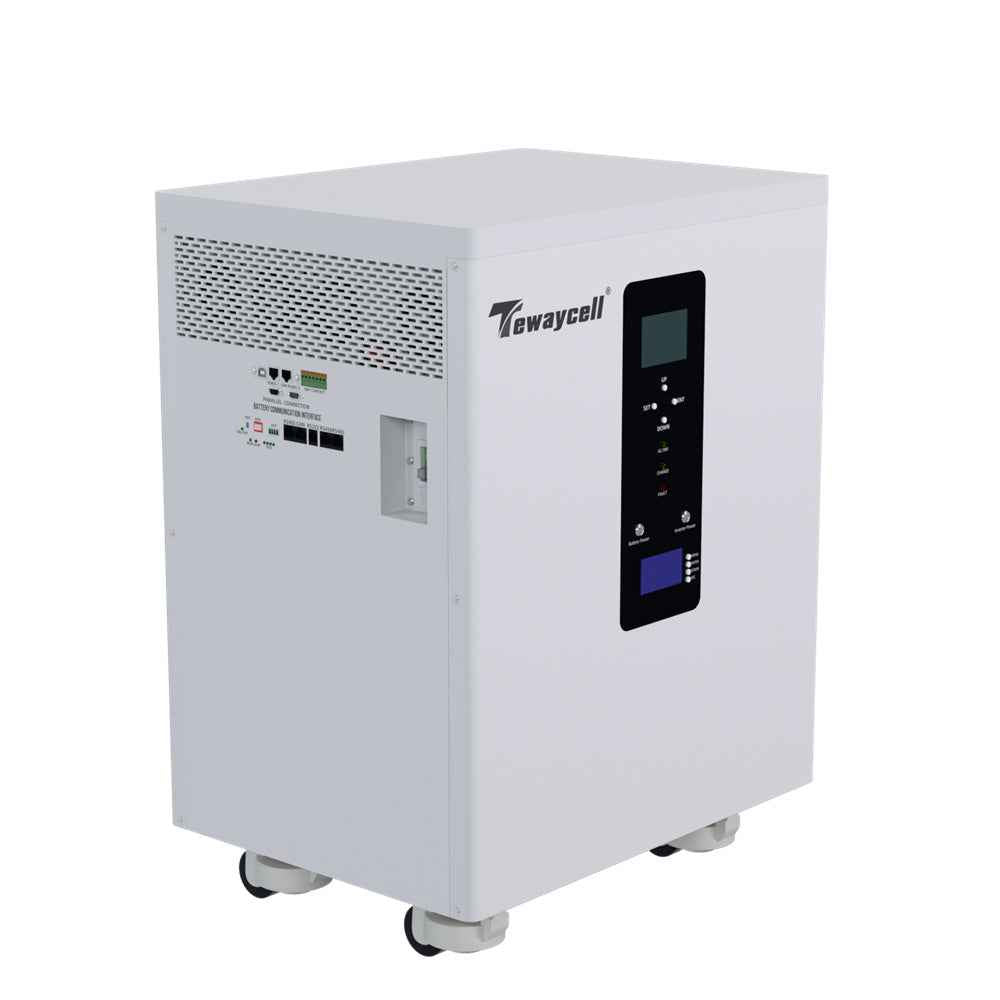
An All-in-One unit combines the battery, its management system and an inverter. This provides a tidy arrangement for storing energy and supplying selected circuits from a plant room. You choose the storage capacity and inverter rating together, then design the electrical connections around the building’s intended operating mode.
Tewaycell offers this arrangement with a 12 kW three-phase SRNE inverter. Our catalogue includes nominal capacities of 28.67 kWh and 32.15 kWh. Both use a 51.2 V battery platform and two MPPT inputs for solar generation. These indoor units support self-consumption, off-grid operation and designed backup applications, with charging available from an AC supply as well.
Two figures that make selection easier
Energy in kWh describes the size of the reserve. Compare it with the electricity you want to shift from daytime generation to evening use. Power in kW describes the rate at which the system can supply energy. It relates to the inverter, the battery’s capabilities and the way demand is distributed through the installation. Together, these figures offer a more useful picture than an amp-hour rating alone.
Start with the daily demand pattern: when the household is active, when the workshop operates and how much solar generation is available to store. Match capacity and power to that pattern. With a standalone battery, the voltage platform, communications and operating parameters are coordinated with the chosen inverter. An All-in-One unit brings those components together as a combined solution.
Find the right starting point
Explore the actual enclosures, photographs and specifications. A battery with BMS provides the foundation for a tailored installation; an integrated-inverter unit combines storage and power conversion in one cabinet.