





Description
Battery storage and three-phase power in one unit
Approximately twenty-nine kilowatt-hours of storage paired with a full 12 kW three-phase power stage. The Tewaycell AO-MB51560-AC380V-12KW combines a 28.67 kWh LiFePO4 battery, rated at 560 Ah and 51.2 V, with an SRNE SPI-12K-H3P three-phase inverter. A continuous rated output of 12 kW, two solar MPPT inputs and integrated battery management provide a compact foundation for solar self-consumption, off-grid power and backup arrangements for selected circuits. Battery storage and power conversion share one standing cabinet with clearly arranged connection points.
28.67 kWh for self-consumption and an energy reserve
The 560 Ah battery provides room to manage electricity across the day. Solar panels may produce most of their energy while the house is quiet, whereas cooking, lighting and home-office equipment may create demand later. Storage helps connect those periods and makes the collected energy available to the designed system when it is needed. A nominal capacity of 28.67 kWh offers a clear starting point for planning daily energy storage and a useful reserve.
The LiFePO4 cells form a battery with a nominal voltage of 51.2 V. Its 16S2P arrangement brings the cells together on a common low-voltage platform. Integrated battery management monitors the assembly while it receives and releases energy. Substantial storage capacity is therefore combined with the electronics that coordinate the battery and its relationship with the built-in inverter, all within one organised piece of equipment.
An SRNE inverter with 12 kW rated output
The built-in SRNE SPI-12K-H3P produces a three-phase 230/400 V AC output with a pure sine waveform. Its 12 kW rated output provides a defined power foundation for a domestic or small commercial installation. The technical specification also lists 24 kW peak output. Combining the inverter with the battery puts stored energy and power conversion into one functional unit with accessible connections for the surrounding electrical installation.
Two MPPT trackers for a considered solar layout
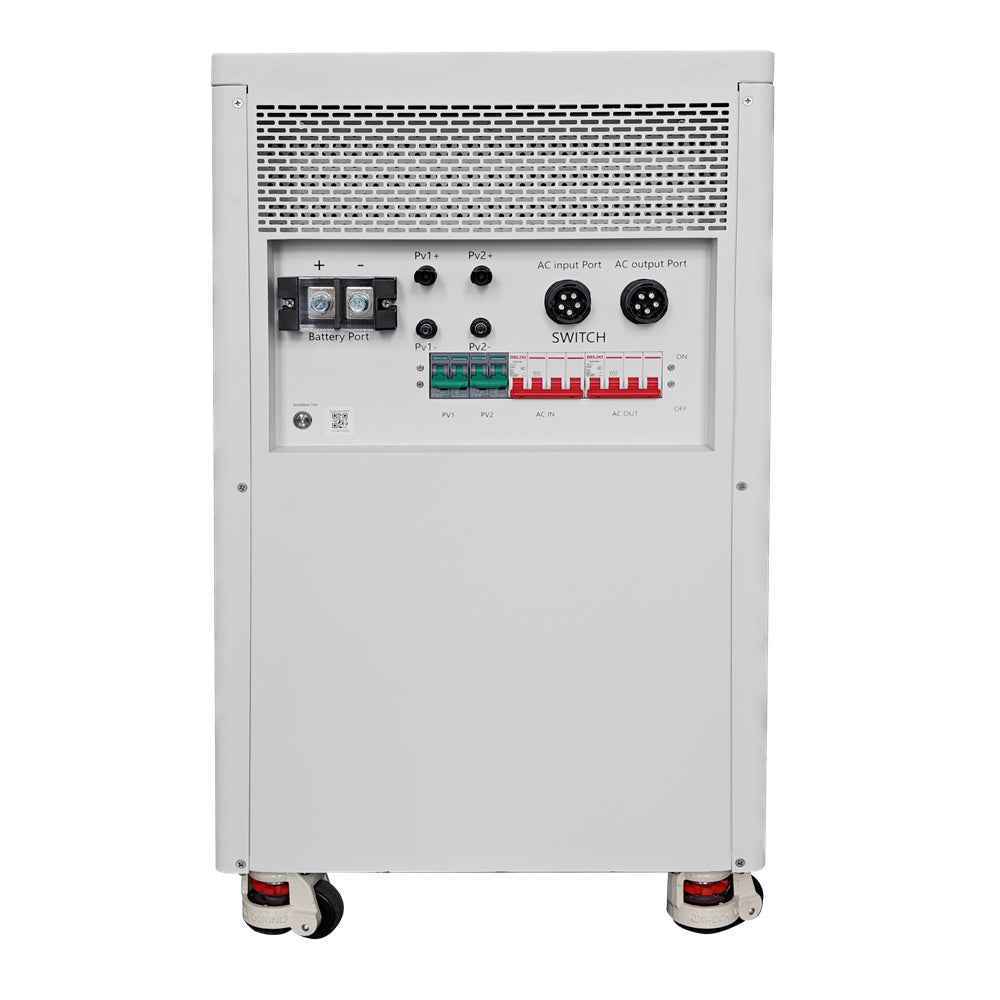
The inverter includes two independent MPPT channels. Each tracks the operating point of its connected solar array, making it practical to work with two groups of panels. This is useful, for example, when the installation has separately designed arrays on different suitable roof areas. The specified MPPT tracking range is 200–650 V DC. For this platform, the manufacturer lists up to 9,000 W of photovoltaic input per channel, or up to 18 kW in total.
Charging from solar generation and an AC supply
The system supports charging through its photovoltaic inputs and through an AC supply. Alongside everyday solar storage, this offers a basis for planned management of the energy reserve. Time-slot charging and discharging settings can be used to reflect the routine of a home or business. Stored electricity can then be assigned to selected operating periods in line with demand and the chosen control strategy for the installation.
300 A battery management and active balancing
The battery section has a specified operating range of 44.8–57.6 V and maximum charging and discharging currents of 300 A. Its integrated management system monitors the cells and coordinates their operation. Active balancing supports equalisation between cells through repeated energy cycles. A practical benefit for the user is that the energy store and its battery-management equipment are already brought together in one purpose-built enclosure.
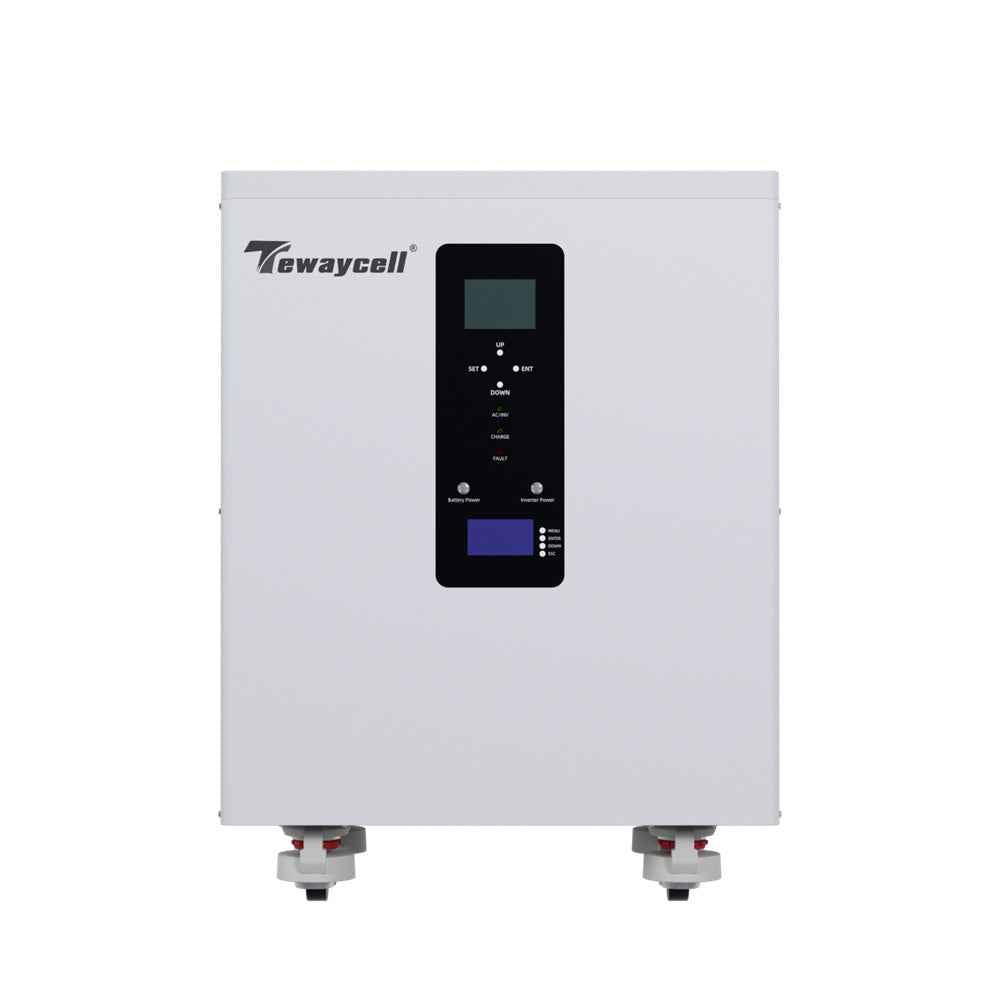
Front-panel information and system interfaces
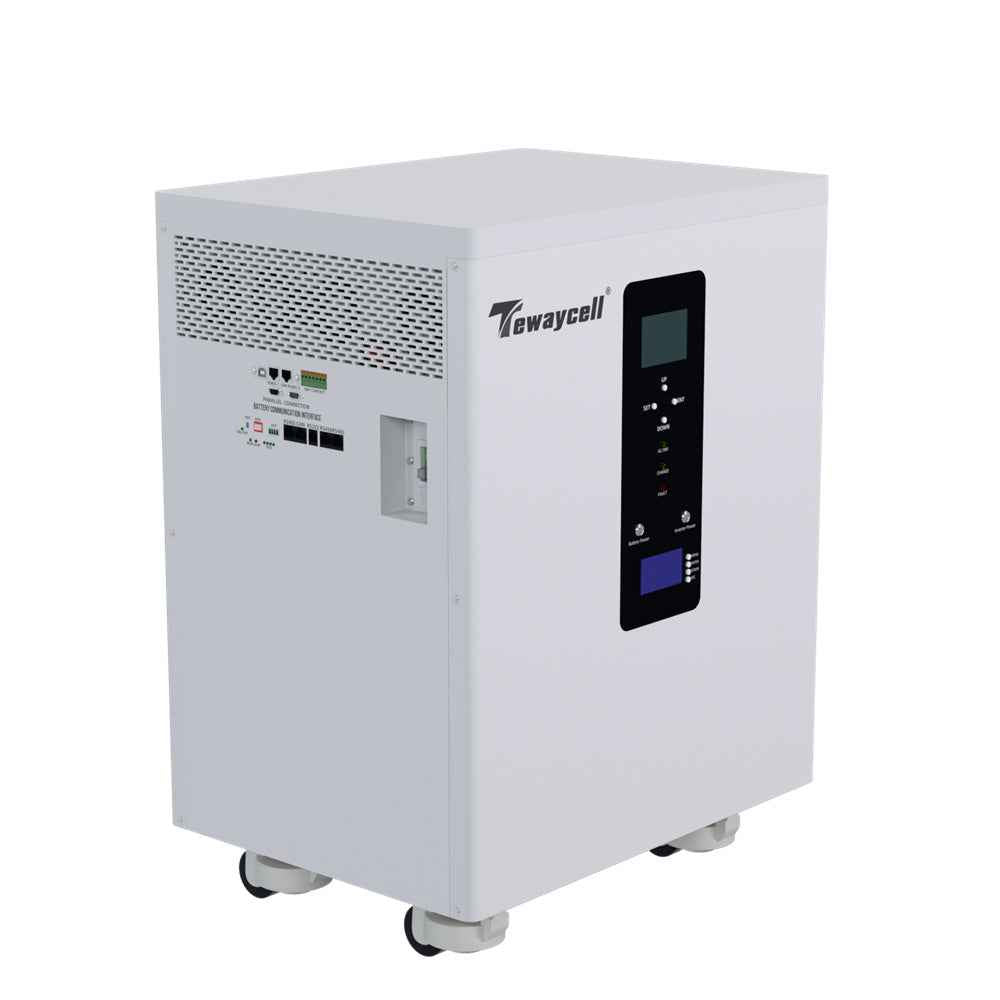
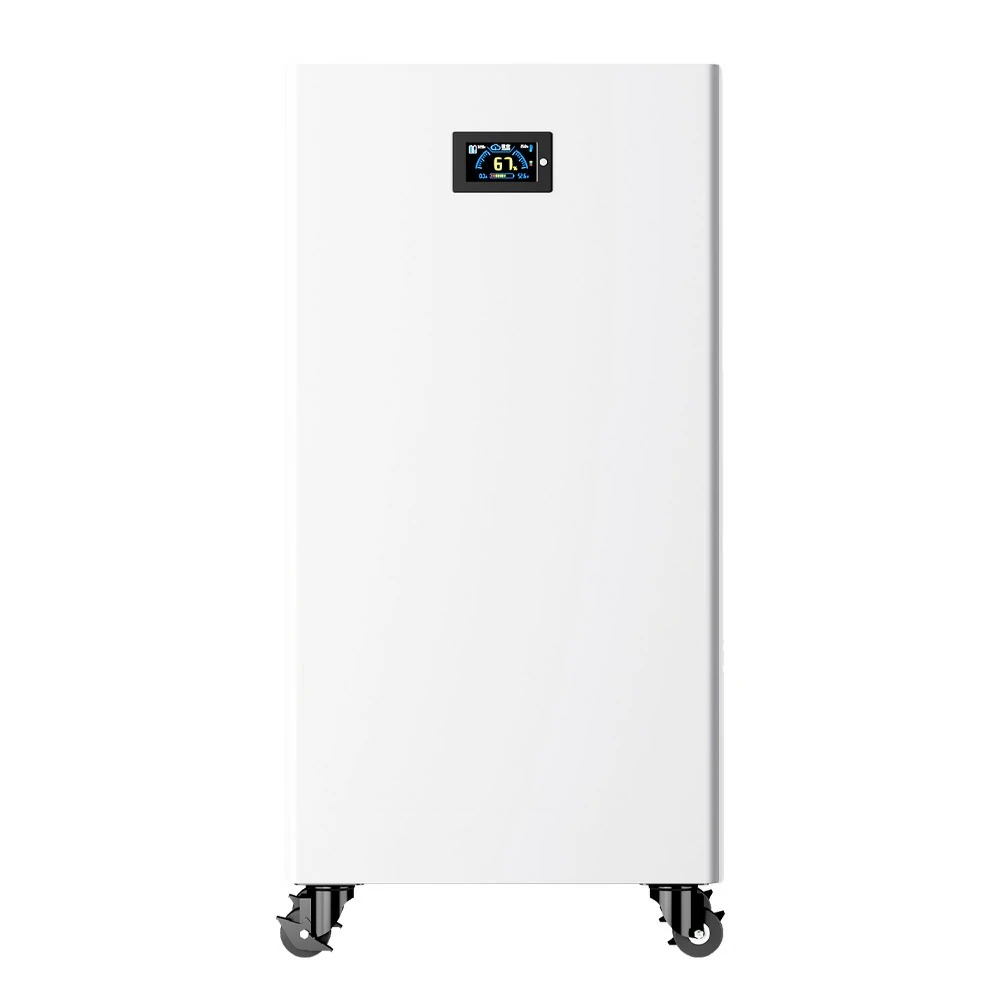
The front of the cabinet groups the displays and operating controls for both the battery and inverter sections. When you approach the unit, storage information is available in one place. This makes it convenient to relate charging activity and battery status to the equipment currently using electricity. The clean front-panel arrangement also fits naturally into a well-organised technical room.
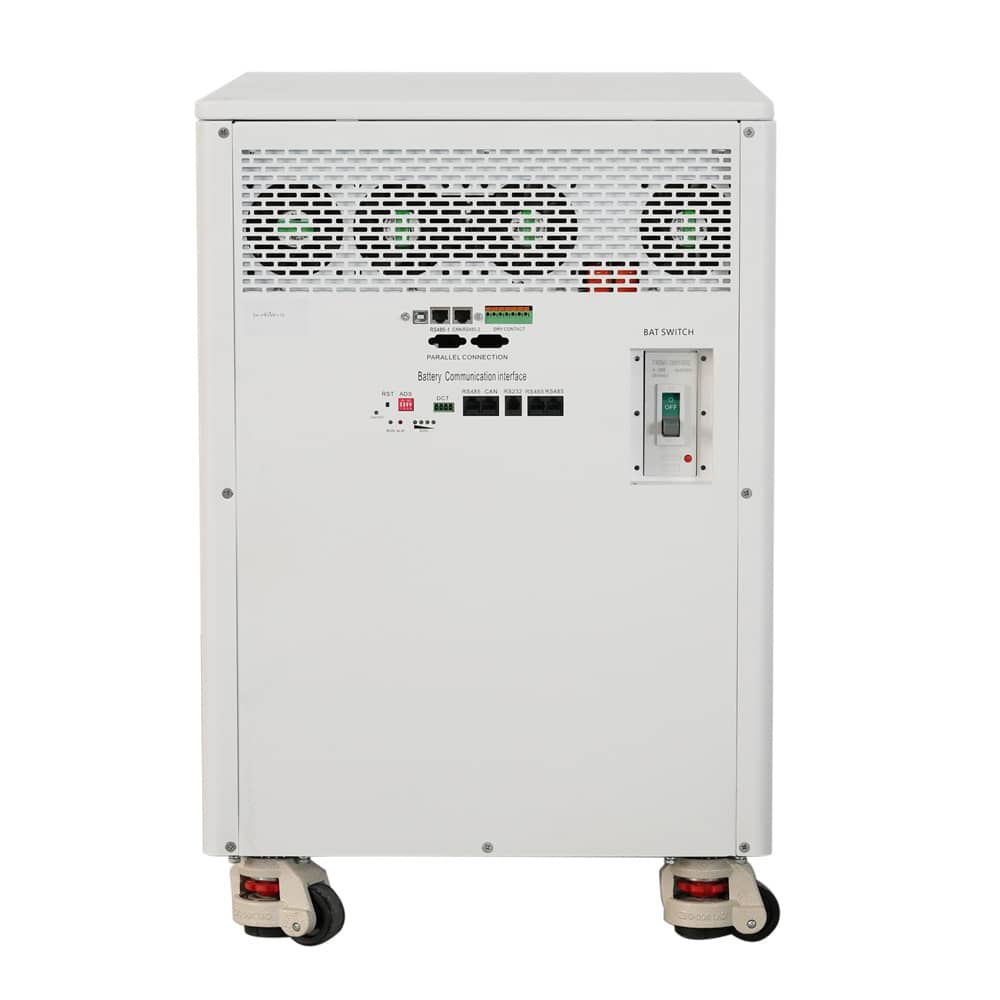
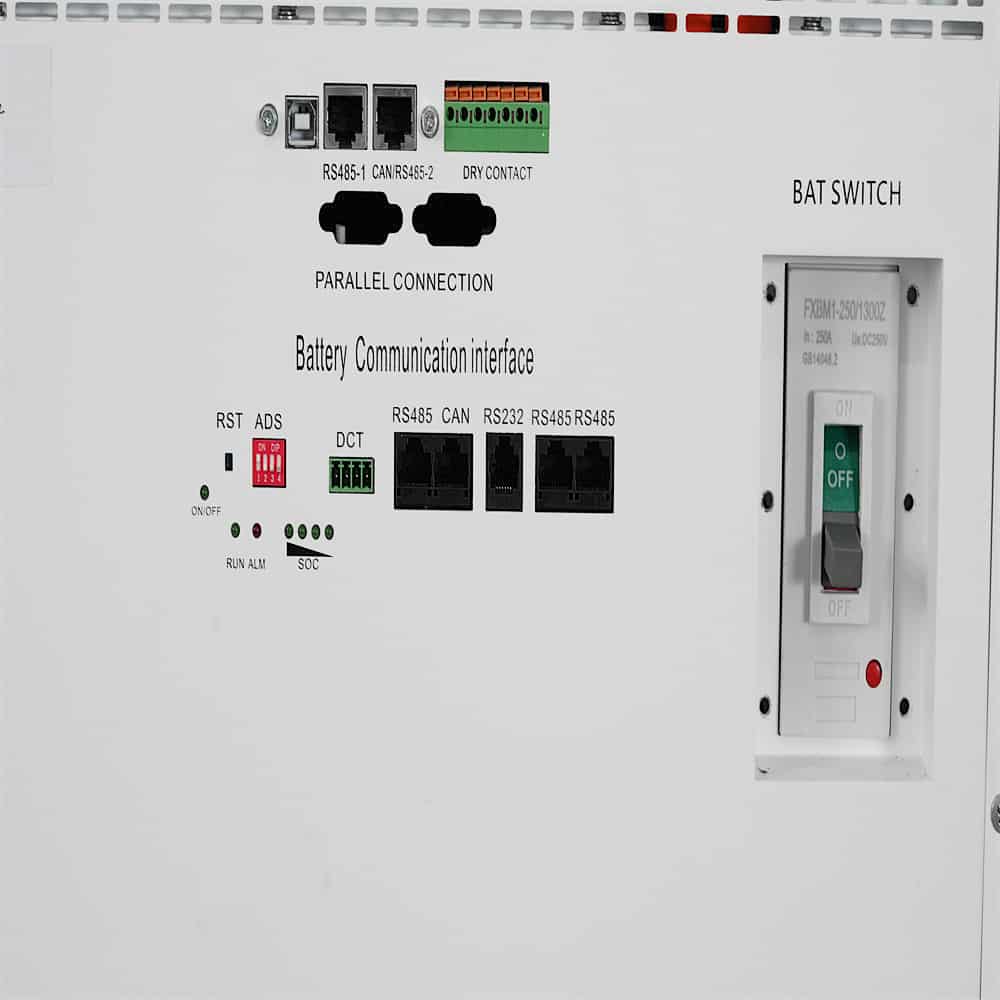
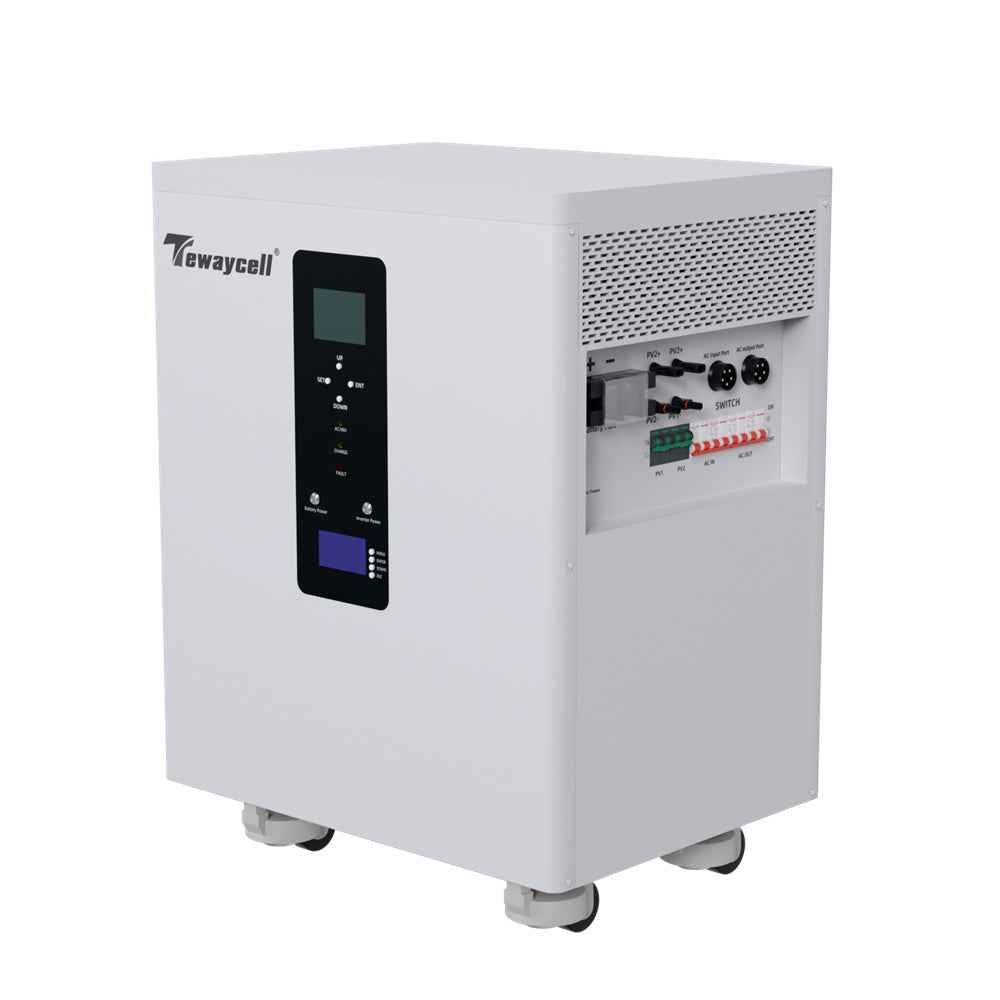
RS485, CAN, USB and a dry-contact interface provide connection points for associated control equipment. The manufacturer's photographs show the arranged connection area and communication ports in detail. These interfaces help incorporate the storage unit into a planned electrical installation and give the related technologies accessible points of connection. The platform also supports expansion by connecting matching all-in-one units in a coordinated system.
A compact foundation for your energy equipment
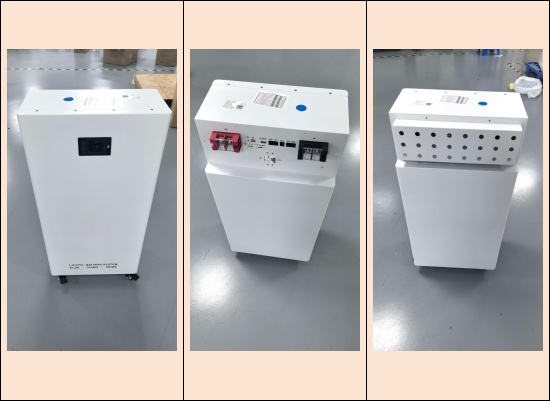
The cabinet measures 750 × 500 × 845 mm and has an IP20 rating for indoor installation. Internal fans provide cooling for the integrated technology. When planning the equipment space, you can work with one cabinet footprint and clearly defined connection areas. The manufacturer's genuine photographs let you see the front controls, side connections and overall layout before incorporating the unit into the installation plan.
The Tewaycell AO-MB51560-AC380V-12KW is an appealing choice for a customer seeking 28.67 kWh of battery energy, 12 kW three-phase output and direct use of solar generation in one system. It suits a considered home energy installation, an off-grid property or a small business project. Defined capacity, an identified SRNE inverter, dual MPPT inputs and accessible local controls provide a clear foundation for putting stored electricity to work every day.
Technical specifications
| Model | AO-MB51560-AC380V-12KW |
|---|---|
| Battery energy | 28.67 kWh |
| Nominal voltage | 51.2 V |
| Capacity | 560 Ah |
| Chemistry | LiFePO4 |
| Battery working voltage | 44.8–57.6 V |
| Maximum charge/discharge current | 300 A / 300 A |
| Inverter | SRNE SPI-12K-H3P |
| Rated output | 12 kW |
| AC output | 230/400 V, three-phase |
| MPPT | 2; 200–650 V DC |
| Interfaces | RS485 / CAN / USB / dry contact |
| Dimensions (L × D × H) | 750 × 500 × 845 mm |
| Weight | 270 kg |
| Protection | IP20 |
| Installation | Indoor |
Reviews
There are no reviews yet.