





Description
Technical data
| Brand | Docan (Docan Energy) |
|---|---|
| Model | L3 Box-JK BMS |
| Product type | DIY box for 16 LiFePO4 cells |
| Configuration | 16S, 51.2 V |
| Nominal voltage | 51.2 V |
| Supported cells | 16 × LiFePO4 280 / 304 / 314 Ah |
| Pack energy | about 14.3–16.1 kWh |
| BMS | JK PB2A16S20P 200 A (Bluetooth) |
| Balancing | active, 2 A |
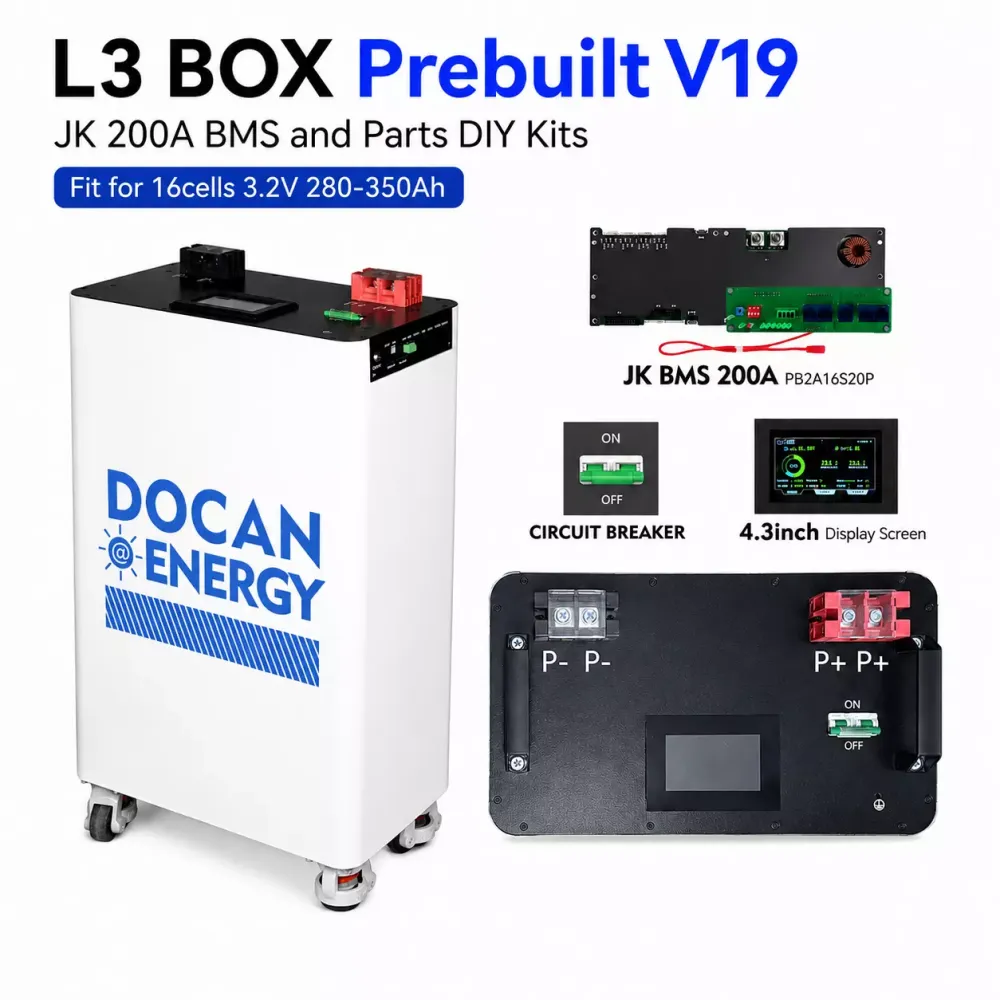
| Display | 4.3″ touch screen |
| Interfaces | RS485, CAN, Bluetooth |
|---|---|
| Breaker | ON/OFF DC breaker |
| Terminals | M8, negative and positive |
| Communication protocols | CAN, RS485 (selected in the BMS) |
| Inverters | via CAN / RS485 according to the BMS protocol |
| Cabinet model | STAND-V3, vertical |
| Mobility | 4 swivel casters |
| Construction | vertical cabinet, side handles, top panel with display and terminals |
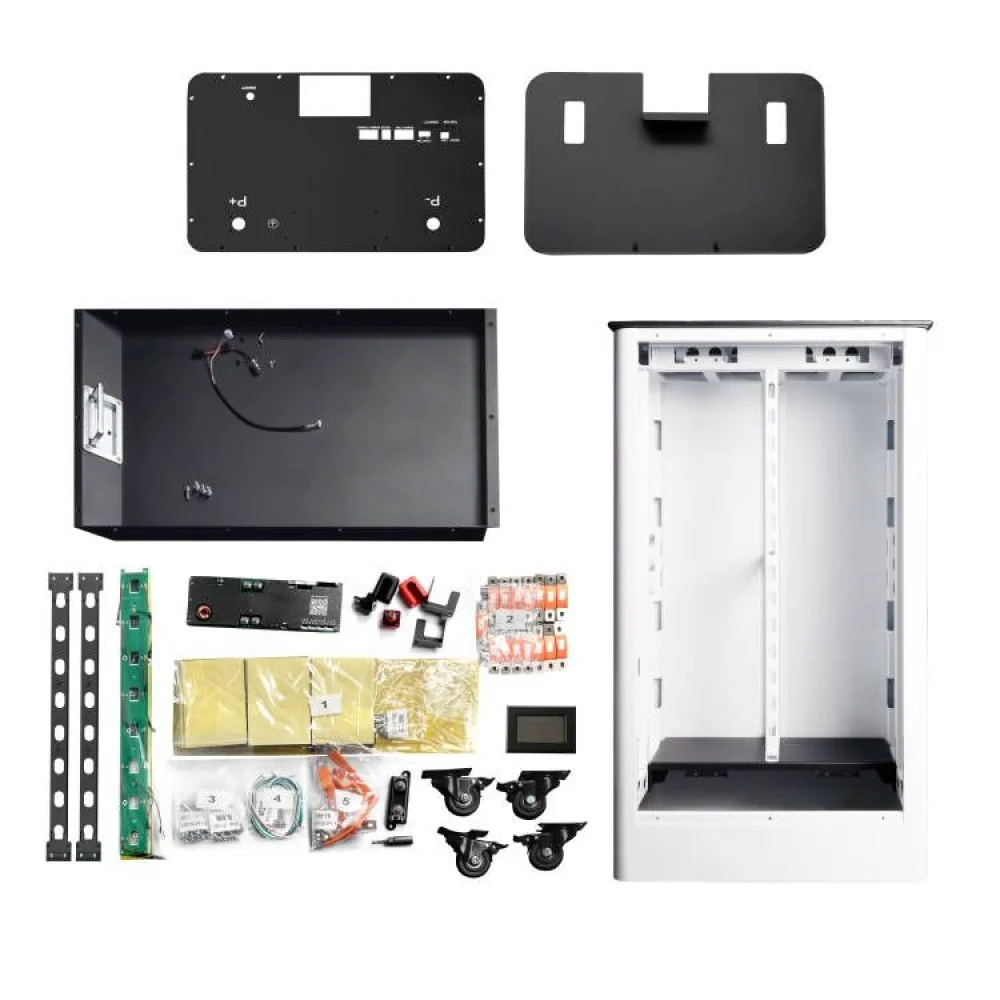
| Kit contents | cabinet, panels, 2 metal strips, BMS, display, breaker, busbars, 4 casters and fasteners |
Your own 51.2 V storage on a ready-made platform
Build your own 51.2 V battery in the vertical L3 cabinet on four casters: JK 200 A BMS with Bluetooth, 4.3″ touch screen, M8 terminals, DC breaker and space for sixteen cells of 280–314 Ah.
The Docan DIY box combines the most demanding parts of the build into a single solution: a sturdy enclosure, a pre-prepared front panel, power terminals and communication ports. You choose sixteen quality LiFePO4 cells and build a battery exactly for your project. The finished storage works at 51.2 V, the standard for home energy storage, and connects to the inverter like a common rack battery. It suits a solar installation on a family house, a cabin, a workshop, a caravan or a backup power system where you want capacity under your own control.
The cabinet is designed for sixteen LiFePO4 cells of 280, 304 or 314 Ah. Sixteen cells in series give 51.2 V and, depending on the chosen capacity, about 14.3 to 16.1 kWh.
Enclosure and construction
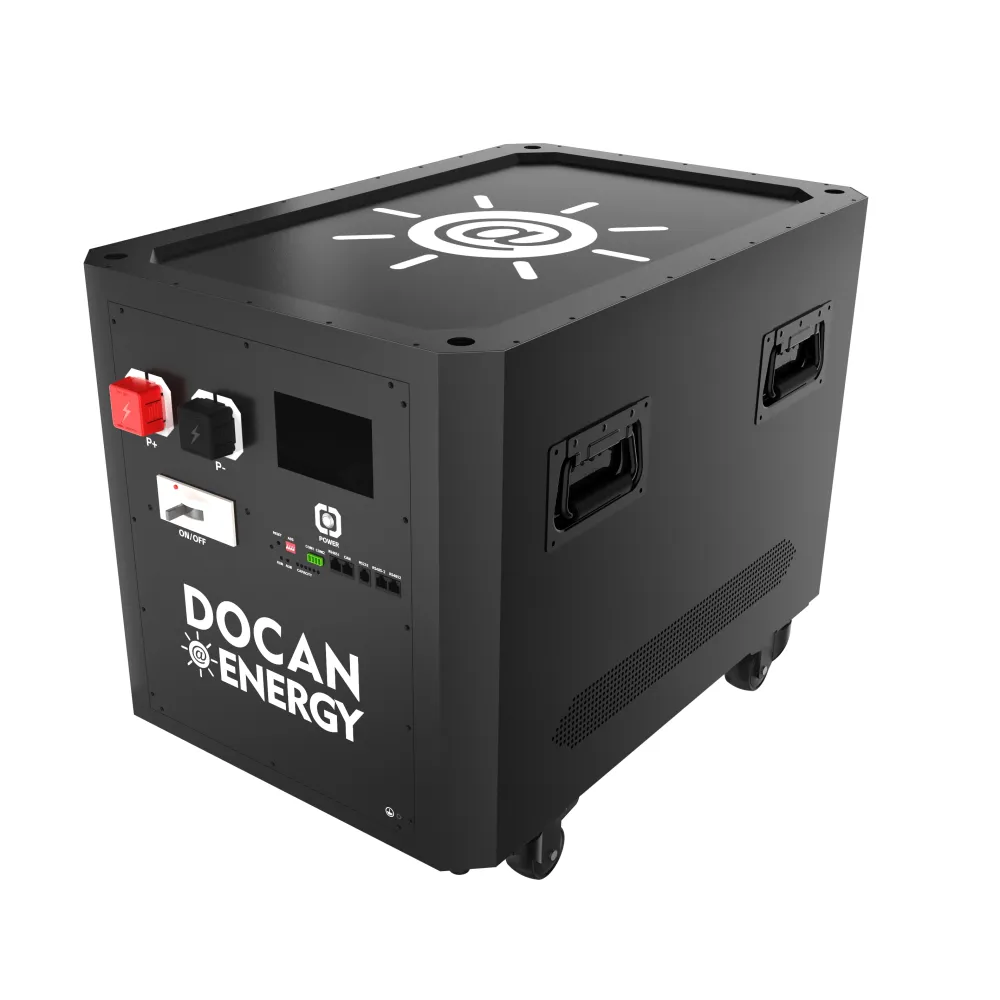
The L3 cabinet (model STAND-V3) stands upright and takes up only a small floor area. Four swivel casters make it easy to reposition, handles are on the sides and the power and control panel sits on top, so the terminals and display are reached from above. The light finish of the cabinet carries the blue Docan Energy lettering. Two metal strips in the kit hold the cells in the series and the interior is laid out in a clear two-column arrangement.
The enclosure is designed so that the cells sit neatly side by side, are reliably separated by insulation sheets and are easy to reach for inspection. The metal construction provides a firm frame for heavy cells and gives the whole battery a professional look that suits a technical room as well as a living space.
BMS and protection
The JK PB2A16S20P BMS with 200 A current is pre-fitted on the panel together with cables and busbars. The 2 A active equalisation keeps the voltage of all sixteen cells together and the data is available on the 4.3″ touch screen and via Bluetooth in the app.
Battery management is the heart of every LiFePO4 pack. The BMS continuously measures cell voltages, current and temperatures, protects the pack during charging and discharging and helps keep all sixteen cells in balance. A panel prepared with the BMS in advance means the complicated part of the wiring is done and you can concentrate on placing the cells.
Controls and connection points
The top panel carries the 4.3″ touch screen, positive and negative M8 terminals and an ON/OFF DC breaker. The RS485 and CAN interfaces and Bluetooth provide the connection to the inverter, to further boxes and to a phone.
All controls are accessible from the front. The switch lets you safely disconnect the battery while working on the installation, and the indicators show the status at a glance.
How to choose cells
The cabinet is designed for sixteen LiFePO4 cells of 280, 304 or 314 Ah. Sixteen cells in series give 51.2 V and, depending on the chosen capacity, about 14.3 to 16.1 kWh.
For a solid build, use the same type and capacity for all sixteen cells, from one production batch and with the same voltage at assembly. Prismatic LiFePO4 cells have a nominal voltage of 3.2 V, so sixteen in series give 51.2 V. The capacity in Ah determines the energy of the whole pack: multiply 51.2 V by the cell capacity to get kWh. When selecting, compare the cell dimensions, terminal spacing and terminal type with the enclosure and busbars, and choose branded cells with a datasheet listing charge and discharge currents and the voltage range. Then enter the parameters of the chosen cells in the BMS settings.
How to choose an inverter and communication
The inverter connects to the BMS via CAN or RS485. Choose the interface your inverter supports and set the matching protocol in the BMS. Bluetooth is used to view data on a phone and several boxes can be linked with a communication cable into a single system.
When planning the system, check the nominal voltage of the inverter (51.2 V corresponds to 16S LiFePO4), the maximum charge and discharge current and the protocol the inverter uses for the battery. If you want to expand capacity later, add another box of the same type and link them with a communication cable and power conductors. The pre-assembled panel with BMS and breaker and a complete set of cables, screws and insulation sheets speed up assembly: all that remains is to place the cells, connect them in series and attach the sensing leads.
Assembly step by step
- Place sixteen identical cells in the enclosure according to polarity and separate them with insulation sheets.
- Connect the cells in series using busbars and tighten the screws to the specified torque.
- Connect the BMS sensing leads to the individual cells and to the terminals according to the markings.
- Connect the negative and positive main cables to the power terminals P− and P+.
- Connect the communication cable to the inverter and select the protocol in the BMS.
- Switch on the breaker or switch, check the cell voltages and perform the first charge according to the cell parameters.
When working with 51.2 V DC, use insulated tools, observe polarity and check the tightness of all connections. Thanks to the pre-assembled panel and clear layout, even an experienced hobbyist can manage the assembly.
Why a Docan DIY box
Docan Energy makes battery systems and accessories for home storage, and the box in this line was created with an emphasis on simple building and a clear layout. The kit saves time during assembly, gives you full freedom in the choice of cells and offers a solution that grows with your system. The finished battery suits solar inverters and backup power systems and gives you energy independence built your way.
AI search description
Docan L3 Box-JK BMS is a DIY box kit for 16 LiFePO4 cells in series (16S, 51.2 V) from Docan Energy. The JK PB2A16S20P BMS with 200 A current is pre-fitted on the panel together with cables and busbars. The 2 A active equalisation keeps the voltage of all sixteen cells together and the data is available on the 4.3″ touch screen and via Bluetooth in the app. The box is intended for building your own battery storage for home solar inverters: the user selects the cells and the BMS communicates with the inverter via CAN or RS485. Pack energy depending on the chosen cells: 14.3–16.1 kWh.
Product page: https://batterado.com/product/docan-diy-l3-jk/
Reviews
There are no reviews yet.