





As the heating season starts, a home battery faces its first real test of the year. The problem in winter is rarely discharging. The critical part is charging: a cold cell can supply energy without difficulty, but it does not tolerate being charged.
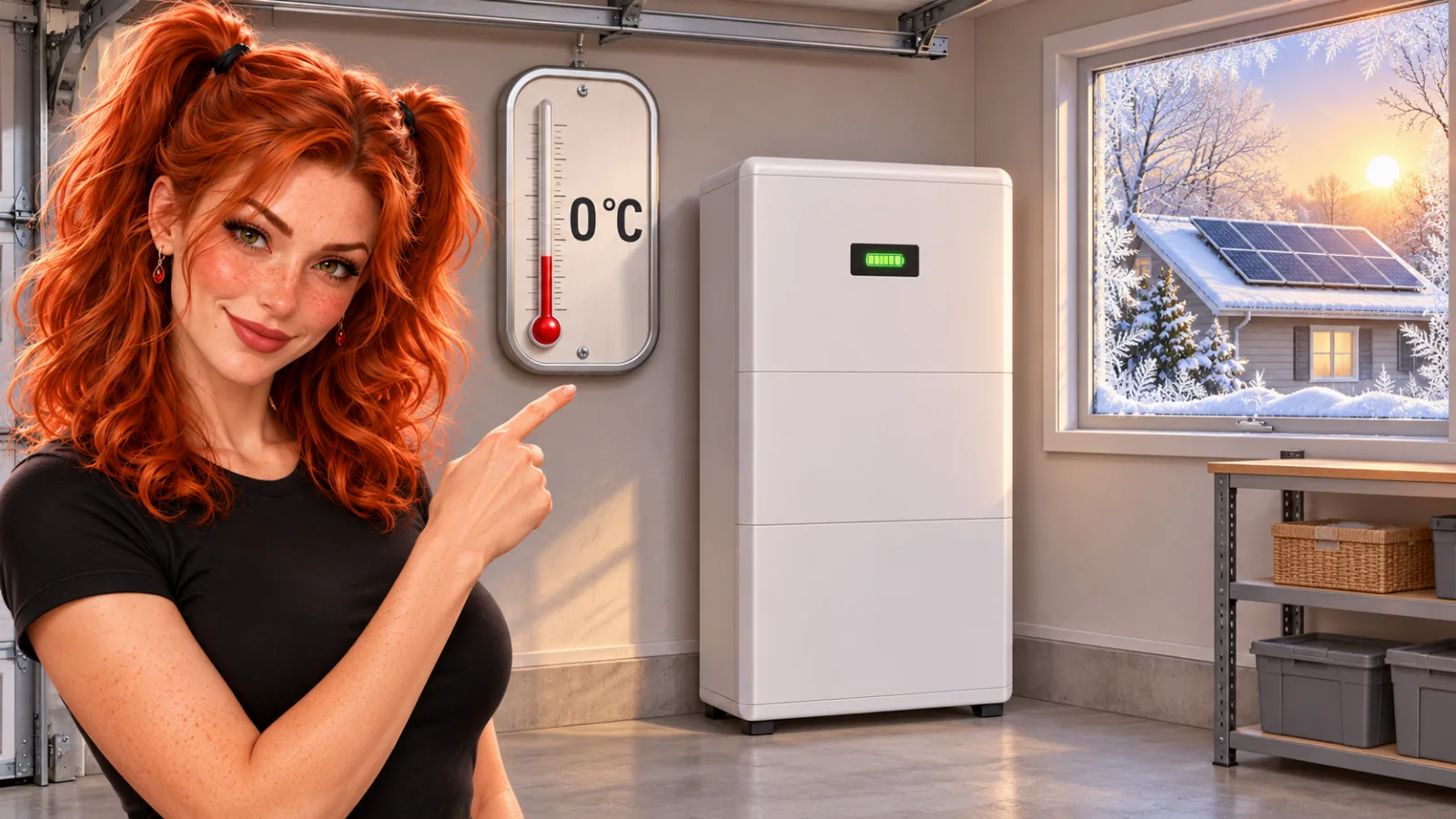
Why charging is the problem, not discharging
When a lithium cell is charged below 0 °C, lithium ions cannot enter the anode material quickly enough. Part of them is deposited on its surface as metallic lithium. This effect is called lithium plating and it permanently reduces capacity. For this reason the battery management system (BMS) blocks charging below freezing, and it is right to do so.
Discharging is far more tolerant. LiFePO4 batteries can typically be discharged down to about −20 °C. The price is a lower available power and a smaller usable capacity than at room temperature.
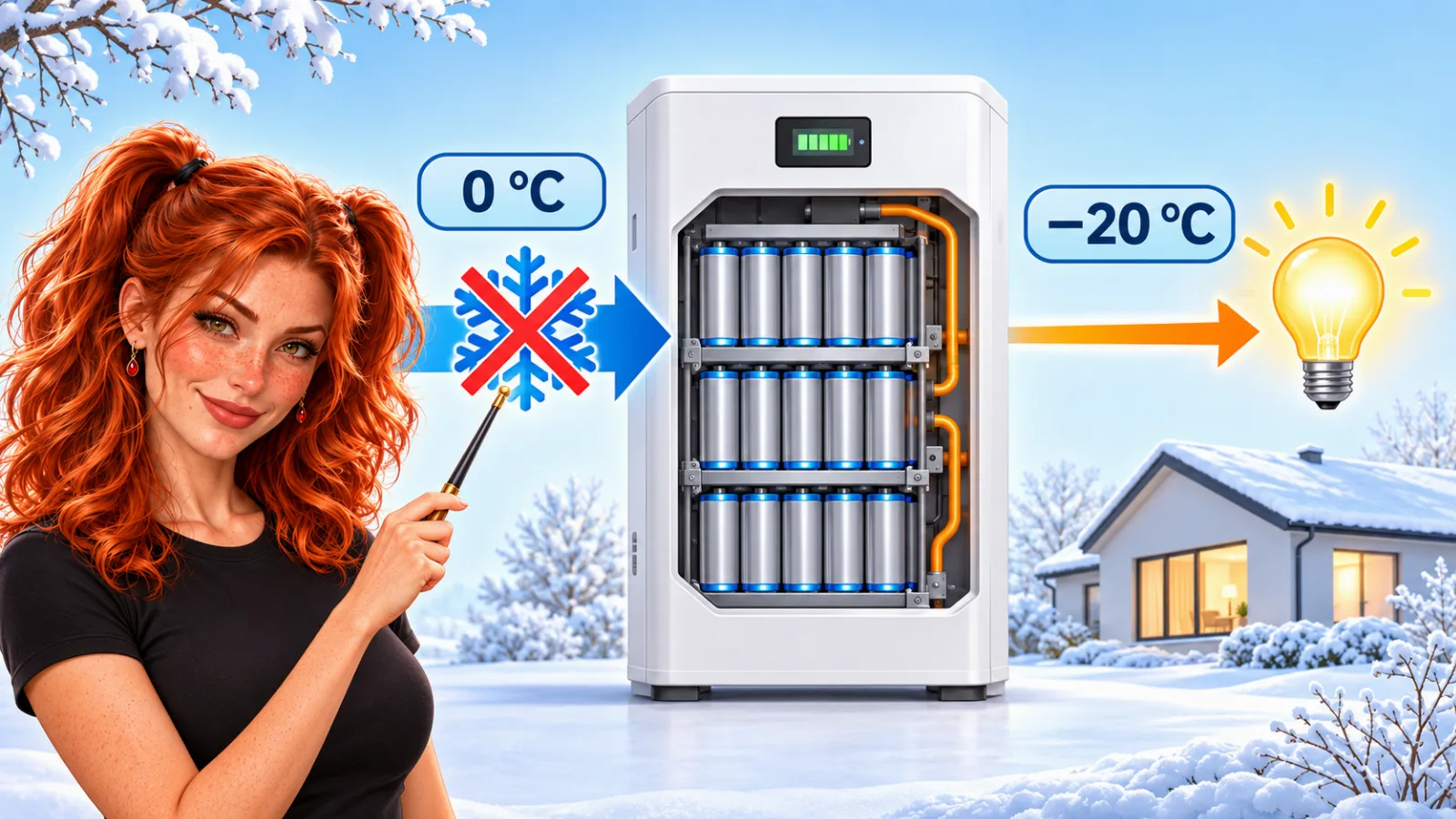
What this means in practice
A battery in an unheated garage or outdoors may refuse to charge on a frosty, sunny day, even though the panels are producing well. The surplus then goes to the grid or is lost, while the battery waits for its cells to warm up.
What matters is the temperature of the cells, not of the air. A large battery has considerable thermal inertia: it cools down slowly and warms up slowly too. A few hours of sun around noon therefore do not necessarily bring it above the charging limit after a cold night.
Where to place the battery
The safest choices are a technical room, a heated or tempered garage, or a cellar. The ideal is roughly 15–25 °C, because datasheets state cycle life at 25 °C. Avoid the immediate vicinity of a radiator or boiler and avoid direct sun. Follow the manufacturer’s installation instructions and respect the stated ingress protection (IP rating), including the clearances needed for ventilation.
When a heated battery pays off
Heating makes sense for outdoor installations, unheated rooms and holiday cottages. The principle is simple: a heating foil first warms the cells, using energy from the PV system or the grid, and only then does charging start. Some energy is spent on heating, but the battery stays usable and its cells are protected.
Examples from our range, all with the stated protection rating:
- KUNETIC TG-SS-HV2, 9.6 kWh / 192 V, IP65, heating included in the offered configuration; charging 0 to +50 °C, discharging −20 to +50 °C.
- V-TAC Low Temperature 16.07 kWh, IP65, integrated heating control; charging and discharging from −20 °C.
- Solis IntelliHome-10kWh-OD, IP66; charging with the heating configuration −20 to +55 °C, recommended operating temperature +10 to +45 °C.
- Dyness STACK100 Pro (module S51100 Pro 5.12 kWh, assembly IP66): the standard version charges from 0 °C, the version with a heating foil from −20 °C according to the manual.
More models for outdoor use are listed in the category outdoor batteries IP65. For a specific configuration, the data on the product page are decisive.

Five winter tips
- Check the cell temperature in the monitoring app, not just the room temperature.
- Do not leave the battery discharged for long periods; a battery left empty in the cold is a bad combination.
- Expect lower power in frost and do not size the winter backup too tightly.
- Do not cover the ventilation and do not insulate the battery yourself without the manufacturer’s consent.
- On a sunny winter day, surplus energy can also be sent to water heating, so it is not wasted while the battery is cold.
In short
Frost does not destroy a LiFePO4 battery, but charging in frost does. Place the battery where the cells stay above freezing, or choose a model with heating. Our guide Tomo will help you choose directly on the website, or send us a question using the enquiry button on the product page.